UP’s Farm Growth Nearly Doubles Since 2017, Says Yogi Adityanath at Kisan Pathshaala 8.0 in Barabanki
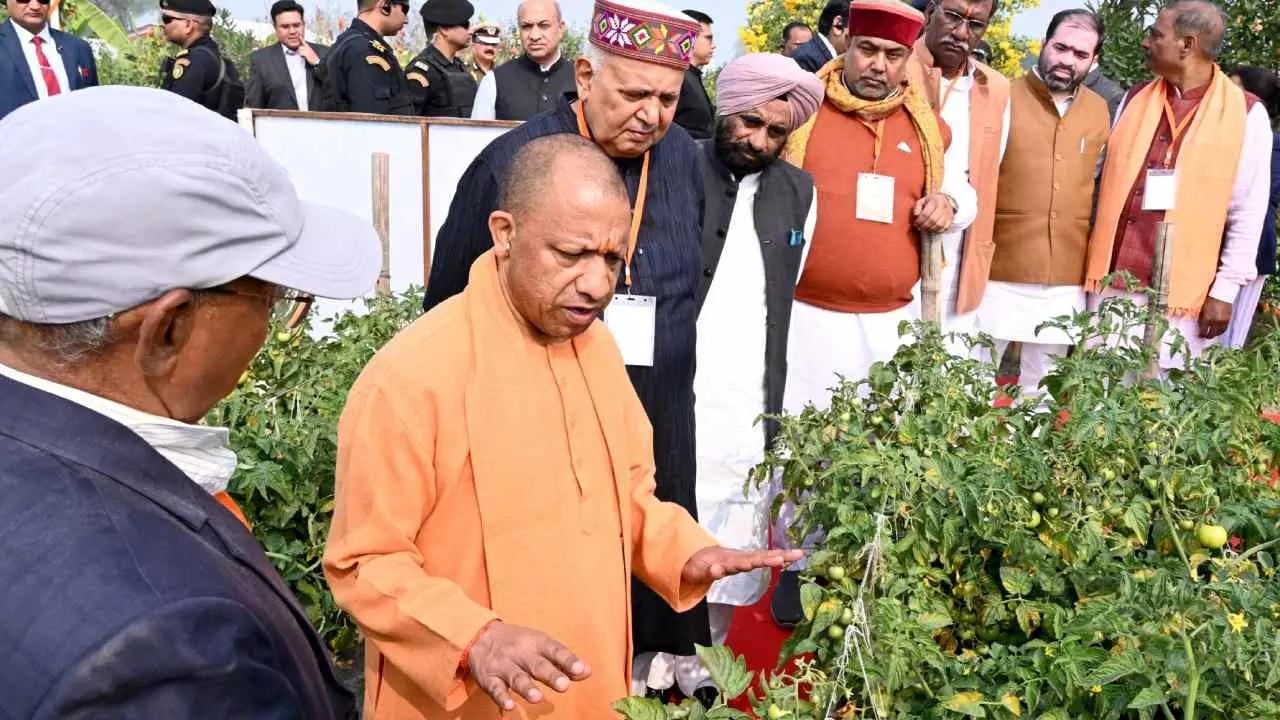
Barabanki, December 13: Uttar Pradesh chief minister Yogi Adityanath on Friday said the state’s agricultural growth rate has more than doubled since 2017, rising from 8.6 per cent to 17.7 per cent, reflecting what he described as sustained reforms, better planning and transparent governance in the farm sector. He was speaking after inaugurating the eighth edition of Kisan Pathshaala for the Rabi season at Daulatpur village in Barabanki district. The programme was held under the Pragatisheel Kisan Sammelan and Kheti Ki Baat Khet Par initiative, where the chief minister interacted directly with farmers in their fields. During the visit, he discussed crop patterns, multi-cropping methods, use of modern technology, and steps taken by the government to increase farm incomes. Highlighting Uttar Pradesh’s contribution to national food security, Yogi Adityanath said the state has around 11 per cent of India’s cultivable land but contributes nearly 21 per cent of the country’s total food grain production. He credited this to improved seed quality, better irrigation facilities and the adoption of scientific farming practices. The chief minister said Uttar Pradesh has nine agro-climatic zones, each with its own farming needs and challenges. According to him, efforts are underway to ensure that farmers in every region receive crop varieties, seeds and technology suited to their local conditions. He added that focused planning and record production levels have given agriculture in the state a new direction over the past eight years. Speaking about environmental responsibility, Yogi Adityanath said while Mother Earth nourishes humanity, her health must also be protected. He stressed that sustainable farming practices are essential to ensure long-term food security and environmental balance. “A healthy planet ensures the survival of humanity and the world,” he said. Referring to the Prime Minister’s Natural Farming Vision, the chief minister said several initiatives are being implemented to reduce farmers’ input costs and improve productivity. He explained that increasing farmers’ income begins with lowering expenses on seeds, fertilisers and chemicals, while ensuring timely access to irrigation and scientific techniques. When these elements come together, he said, farming becomes more profitable and sustainable. During his interaction with farmers, the chief minister cited practical examples to show how innovation and planning can deliver strong results. He mentioned cases where potato farmers achieved yields of up to 250 quintals, and banana cultivation generated earnings of around ₹2 lakh per acre. These examples, he said, demonstrate that high productivity is possible even with relatively low input costs. Yogi Adityanath also spoke about transparency in the minimum support price system and said efforts are being made to ensure farmers receive fair prices without delays or middlemen. He reiterated that the “double-engine government” at the Centre and the state places farmers at the heart of development and sees their prosperity as essential to building a Viksit Bharat. Agriculture minister Surya Pratap Shahi, who was present at the event, said the initiative was unique in its approach. He noted that this was the first time a chief minister had visited a farmer’s field to discuss agricultural practices in such depth and detail. According to him, such direct engagement helps bridge the gap between policy and ground realities. As part of the programme, the chief minister handed over tractor keys to farmers and distributed cheques and certificates to beneficiaries of various government schemes. Farmers present at the event shared their experiences and discussed challenges related to crops, costs and market access. The Kisan Pathshaala initiative aims to create a platform where farmers can learn directly from experts and policymakers, exchange ideas and adopt best practices. Friday’s event reflected the government’s effort to combine policy support with field-level engagement, reinforcing its focus on agriculture as a key driver of economic growth in Uttar Pradesh. With continued emphasis on technology, sustainability and farmer welfare, the state government said it aims to further strengthen the agricultural sector and ensure stable incomes for farmers in the years ahead. UP’s Farm Growth Nearly Doubles Since 2017, Says Yogi Adityanath at Kisan Pathshaala 8.0 in Barabanki Uttar Pradesh chief minister Yogi Adityanath on Friday said the state’s agricultural growth has seen a major rise over the past eight years, with the growth rate increasing from 8.6% in 2017 to 17.7% today. He shared this while inaugurating Kisan Pathshaala 8.0 for the Rabi season at Daulatpur village in Barabanki, where he interacted directly with farmers in their fields. Highlighting the state’s role in national food security, the chief minister said Uttar Pradesh has just 11% of India’s cultivable land but contributes nearly 21% of the country’s total food grain production. He credited this progress to better planning, transparent governance, improved seed quality, irrigation facilities and the use of scientific farming methods. During the Pragatisheel Kisan Sammelan and Kheti Ki Baat Khet Par programme, Yogi Adityanath discussed multi-cropping, modern technology and steps taken to raise farmers’ incomes. He said Uttar Pradesh’s nine agro-climatic zones require region-specific seeds and techniques, and work is ongoing to ensure farmers get the right support based on local conditions. The chief minister also spoke about protecting the environment, saying that while Mother Earth feeds humanity, her health must also be safeguarded. He linked this to the Prime Minister’s Natural Farming Vision, which focuses on reducing input costs and increasing production by providing timely seeds, fertilisers, irrigation and scientific guidance. Sharing real examples, he mentioned potato farmers achieving yields of up to 250 quintals and banana cultivation earning around ₹2 lakh per acre, proving that high productivity is possible with lower costs. He also stressed transparency in the MSP system and said farmers remain central to building a Viksit Bharat. At the event, tractor keys, cheques and certificates were distributed to beneficiaries of government schemes, reinforcing the state’s focus on farmer welfare.