Nationwide Strike by Swiggy, Zomato, Amazon Delivery Workers Ahead of New Year Highlights Growing Gig Worker Concerns
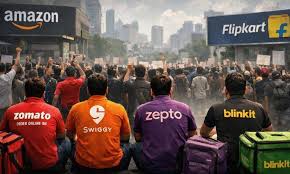
New Delhi | December 31, 2025 Gig and platform workers associated with major delivery and e-commerce companies such as Swiggy, Zomato, Zepto, and Amazon went on a nationwide strike on Wednesday, December 31, a day before New Year celebrations. The protest, organised across several cities in India, was called to highlight what workers describe as unfair policies, unstable earnings, and lack of social security in the rapidly growing gig economy. The strike was coordinated under the banner of the Indian Federation of App-Based Transport Workers (IFAT), following a call given by the Telangana Gig and Platform Workers Union (TGPWU). Confirming the development, TGPWU founder and president Shaik Salauddin said the decision to strike was taken after repeated appeals to platform companies failed to bring any meaningful response. He told news agency ANI that workers had no option left but to protest to draw attention to their issues. Delivery executives participating in the strike said their working conditions have worsened over time, even as demand for app-based services has grown. They claimed that frequent changes in payout structures, increased delivery pressure, and unpredictable incentives have made their incomes unstable. Due to the strike, delivery services on popular food and grocery apps were affected in several cities, causing delays for customers. One of the key demands raised by the workers is the restoration of the earlier payout system. According to Salauddin, during festivals like Dussehra, Diwali, and Bakrid, delivery workers were paid fairly and transparently under the old model. He said that such a system should be brought back on a regular basis to ensure stable earnings and reduce financial stress. Another major concern raised by the union is the 10-minute delivery model introduced by some platforms. Workers argue that this system forces them to rush, increases work pressure, and puts their lives at risk on busy roads. They claim that unrealistic delivery timelines compromise road safety and negatively affect their physical and mental well-being. The issue of sudden blocking or deactivation of worker accounts has also been highlighted. According to the union, delivery partners are often removed from platforms without clear explanations or prior notice. Such actions, workers say, leave them without income overnight and offer no proper system for appeal or grievance redressal. Workers have also raised concerns about the use of algorithms by platform companies. The union alleges that these automated systems control order allocation, incentives, and penalties in ways that are not transparent. As a result, workers feel their earnings are unpredictable and heavily influenced by systems they do not understand or control. The final and most crucial demand is the introduction of social security benefits for gig workers. The union has called for insurance coverage, health benefits, and welfare measures, pointing out that despite forming a large part of the urban workforce, gig workers remain outside basic social protection systems available to regular employees. Salauddin said the decision to hold a flash strike on December 31 was taken due to the lack of progress on these demands. He appealed to gig and platform workers across the country to participate peacefully and responsibly. He added that the aim of the protest is not to disrupt services unnecessarily but to bring the concerns of gig workers to the notice of companies and policymakers. The strike comes at a time when the gig economy is expanding rapidly in India, raising fresh questions about worker rights, fair pay, and long-term security in platform-based jobs. Nationwide Strike by Swiggy, Zomato, Amazon Delivery Workers Ahead of New Year Highlights Growing Gig Worker Concerns Gig and platform workers across India went on a nationwide strike on December 31, a day before New Year, demanding better pay, safer working conditions, and social security. Workers from companies like Swiggy, Zomato, Zepto, and Amazon joined the protest under the banner of the Indian Federation of App-Based Transport Workers (IFAT) and the Telangana Gig and Platform Workers Union (TGPWU). Shaik Salauddin, TGPWU president, said the strike came after repeated appeals to platform companies failed to resolve workers’ issues. Delivery executives claimed that frequent changes in pay structures, unrealistic delivery targets, and algorithm-driven incentives have made earnings unpredictable. The strike affected food and grocery deliveries in several cities. One of the main demands is the return of the earlier payout system, which provided stable and transparent earnings, especially during festivals like Dussehra, Diwali, and Bakrid. Workers also called for the withdrawal of the 10-minute delivery system, which they say forces them to rush, increasing stress and risking their safety on the road. The sudden blocking or deactivation of worker accounts was another key concern. Workers reported that IDs are sometimes suspended without explanation or notice, leaving them without income and no way to appeal. They also raised issues with algorithmic systems that affect order allocation and incentives, making earnings unstable and unfair. Finally, gig workers demanded the introduction of social security benefits, including insurance and welfare measures, pointing out that they remain outside basic protection despite forming a large part of the workforce. Salauddin urged workers across India to participate peacefully, emphasizing that the strike aims to bring attention to urgent problems faced by gig workers. The protest highlights growing concerns about rights, safety, and fair treatment in India’s rapidly expanding gig economy.