Serbian Police Arrest 37 After Violent Anti-Government Protests Rock Belgrade
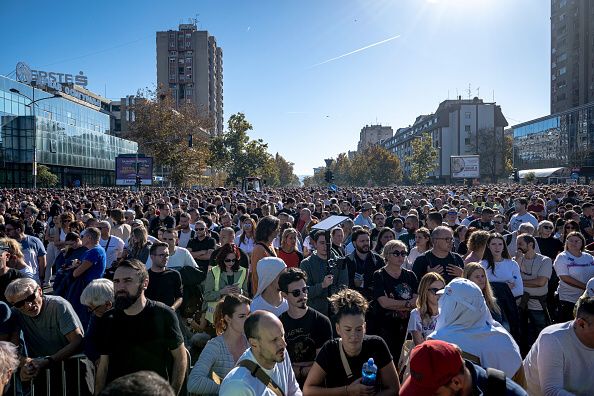
New Delhi, November 3, 2025 Tensions escalated in Serbia late Sunday as violent clashes erupted between anti-government demonstrators and supporters of President Aleksandar Vucic in Belgrade and Novi Sad. The unrest, which coincided with the anniversary of a deadly building collapse, resulted in the detention of 37 people, according to Serbia’s interior ministry. Hundreds of protesters had gathered near the parliament building in Belgrade to express anger over what they allege is government corruption and a lack of accountability following last year’s tragedy in Novi Sad, where a newly renovated railway station roof collapsed, killing 16 people. The disaster has since become a rallying point for youth-led protests demanding justice and political change. The demonstration intensified when supporters of President Vucic—who have been occupying the boulevard outside parliament since March—confronted the protesters. Witnesses reported flares being thrown by both sides, and police were forced to intervene to prevent the situation from spiraling further. Video footage captured by Reuters showed officers separating the rival groups amid chaotic scenes. The clashes followed a weekend of demonstrations that saw crowds gathering across Serbia’s major cities, including Novi Sad, where emotions remain high over the government’s failure to prosecute anyone responsible for the fatal collapse. Many demonstrators voiced frustration over what they see as systemic corruption, cronyism, and an erosion of public trust in state institutions. At the center of the Belgrade protest was Dijana Hrka, the mother of one of the victims, who has been on hunger strike to demand justice for her son and others killed in the incident. Hrka and her supporters were reportedly kept behind barricades separating them from Vucic’s backers, who played loud music from speakers, further inflaming tensions. Police officials said those arrested face charges of disturbing public order and participating in unauthorized gatherings. Authorities accused the demonstrators of provoking violence, while opposition leaders countered that police used excessive force to suppress legitimate dissent. The weekend unrest has deepened the political crisis facing Vucic’s administration, which has been accused by critics of using intimidation tactics and media control to silence opponents. Calls for early elections have grown louder, with protest organizers vowing to continue their demonstrations until the government resigns. The Vucic government, however, has dismissed the protests as politically motivated attempts to destabilize the country. In a televised address on Monday, officials said the president “remains committed to stability and rule of law,” and urged citizens to avoid “manipulation by those seeking chaos.” The anniversary of the Novi Sad disaster has reignited public outrage, symbolizing broader frustrations with governance and accountability in Serbia. Analysts warn that unless the government takes meaningful steps toward transparency and justice, the unrest could escalate further, testing the resilience of Serbia’s political institutions and civil society. Serbia’s Streets Erupt as Protests Turn Chaotic Serbia witnessed intense clashes in Belgrade and Novi Sad as anti-government protesters and supporters of President Aleksandar Vucic confronted each other near parliament. The unrest, sparked by anger over a deadly building collapse and alleged corruption, led to 37 arrests. Police intervened after flares were thrown, separating the rival crowds. Protesters, demanding justice and accountability, rallied behind a grieving mother on hunger strike. Authorities accused demonstrators of disturbing public order, while critics condemned police action as excessive. The violent scenes have deepened Serbia’s political turmoil, amplifying calls for transparency and early elections.