Russia Signals Willingness to Share Su-57 Source Code With India, Offers Deep Technology Transfer for IAF Fighter Needs
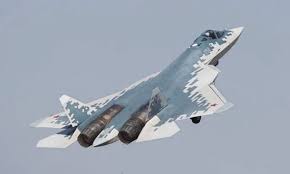
New Delhi | December 23, 2025 Russia has indicated it is ready to offer India an unprecedented level of defence cooperation by sharing source codes and transferring advanced technology for its fifth-generation stealth fighter, the Su-57E, if New Delhi decides to induct the aircraft into the Indian Air Force (IAF). The offer was confirmed by Vadim Badekha, Chief Executive Officer of United Aircraft Corporation (UAC), in an exclusive interaction. According to Badekha, Russia is prepared to go beyond standard defence exports and provide India with full access to critical technologies, including software source codes and design documentation. This, he said, would allow Indian engineers to independently modify, upgrade, and modernise the aircraft over its long service life. The Su-57E is the export version of Russia’s Su-57 stealth fighter, also known by its NATO name “Felon”. The discussion comes at a time when the IAF is facing a shortage of fighter aircraft, following the retirement of the MiG-21 Bison fleet after more than six decades of service. While the Tejas Mk-1A is expected to fill part of the gap, the IAF is also planning for a future built around fourth- and fifth-generation fighters. Badekha said that only a handful of countries produce fifth-generation aircraft, and Russia remains the only partner willing to offer such platforms to India on flexible and cooperative terms. The Su-57E has drawn attention in India since its first appearance at Aero India 2025 and was also discussed during Russian President Vladimir Putin’s recent visit to India. UAC has presented multiple options to Indian authorities, including the direct purchase of aircraft as well as licensed production in India, similar to the long-running Su-30MKI programme with Hindustan Aeronautics Limited (HAL). India had earlier exited a joint development programme related to the Su-57 in 2018, citing concerns over cost, timelines, and technological risks. Addressing this, Badekha said the aircraft has evolved significantly since its early prototypes. The Su-57 is now in serial production for the Russian Aerospace Forces and has demonstrated its capabilities in real combat conditions. He added that export agreements for the Su-57E are already in place. The aircraft has undergone major upgrades over the years, including improvements in weapons systems, avionics, and stealth features. Flight testing has also begun on a new engine, known as Product 177, which is expected to increase thrust, enhance supersonic cruise performance, and further reduce radar visibility. One of the key strengths of the Su-57E, according to UAC, is its open avionics architecture and high modernisation potential. With source code access, India could integrate indigenous weapons and systems, aligning the aircraft with the “Make in India” and Atmanirbhar Bharat initiatives. The platform is designed for a service life of 40 to 50 years and is expected to support future technologies, including manned-unmanned teaming and next-generation combat systems. Badekha also dismissed criticism that the Su-57 lacks combat experience, stating that it is the only fifth-generation fighter to have seen extensive real-world combat use. He said the aircraft has carried out precision strikes against air and ground targets in all weather conditions and in heavily jammed environments, using advanced stealth weapons. On concerns related to Western sanctions, Badekha emphasised India’s sovereign right to choose its defence partners. He pointed out that India and Russia already conduct trade through alternative payment mechanisms, including rupee-ruble arrangements, and local production would further reduce external risks. Russia, he said, is ready to localise production in India and ensure secure, transparent systems without hidden vulnerabilities. Drawing on more than 60 years of joint aircraft programmes, from the MiG-21 to the Su-30MKI, Badekha expressed confidence that cooperation on the Su-57E could mark the next chapter in India-Russia defence Russia Signals Willingness to Share Su-57 Source Code With India, Offers Deep Technology Transfer for IAF Fighter Needs Russia has made a strong pitch to deepen defence ties with India by offering extensive technology transfer for its fifth-generation stealth fighter, the Su-57E. In an exclusive interaction, United Aircraft Corporation CEO Vadim Badekha said Moscow is ready to share even the aircraft’s source code if India chooses to induct the fighter into the Indian Air Force. The offer comes at a crucial time for the IAF, which is facing a shortage of fighter jets after retiring the MiG-21 Bison fleet. While indigenous Tejas Mk-1A aircraft are being inducted, India is also looking at advanced fourth- and fifth-generation fighters to meet future needs. According to Russia, the Su-57E fits these requirements and aligns well with India’s long-term defence plans. Badekha said India has been offered multiple options, including direct purchase of the aircraft or licensed production within the country, similar to the successful Su-30MKI programme with HAL. He stressed that Russia is willing to support the “Make in India” and Atmanirbhar Bharat initiatives by allowing Indian engineers to modify, upgrade, and modernise the fighter independently. The Su-57E, showcased at Aero India 2025, is the export version of Russia’s Su-57 stealth jet. It has evolved significantly over the past decade and is now in serial production. Russia claims the aircraft is combat-proven, having been used in real operations, and can carry advanced weapons for precision strikes in all weather and heavy electronic warfare conditions. Russia also addressed concerns over sanctions, saying India is a sovereign nation and long-standing strategic partner. Local production and alternative payment systems could help avoid disruptions. With a projected service life of 40–50 years and scope for future upgrades, the Su-57E is being projected as a long-term solution for India’s air power needs. Whether India accepts the offer or not, the proposal highlights how strategic defence cooperation between the two countries continues to evolve.