Centre Tells Delhi High Court GST Cut on Air Purifiers Beyond Judicial Scope
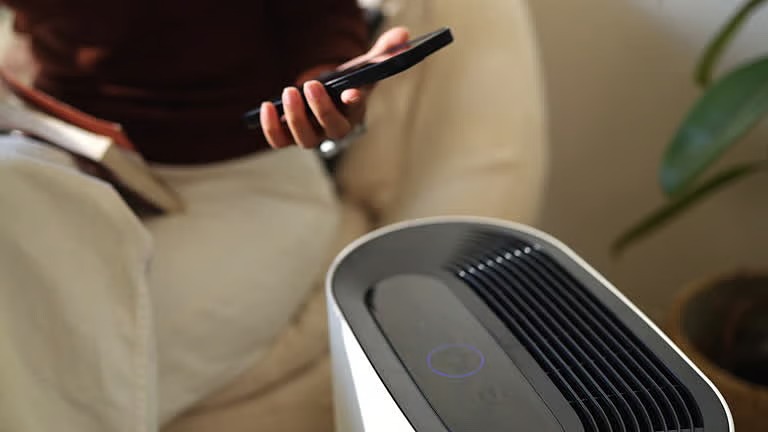
New Delhi | January 9, 2026: The Central government has opposed a public interest litigation (PIL) in the Delhi High Court seeking a reduction in Goods and Services Tax (GST) on air purifiers, arguing that courts cannot interfere in matters related to taxation and economic policy. The plea sought directions to classify air purifiers as “medical devices” and bring them under the 5% GST slab instead of the existing 18%. In an affidavit filed before the court, the Centre stated that any judicial direction to alter GST rates or compel the GST Council to take a particular decision would violate the constitutional principle of separation of powers. It stressed that taxation and fiscal policy fall exclusively within the domain of the GST Council under Article 279A of the Constitution. The PIL, filed by advocate Kapil Madan, argued that air purifiers should not be treated as luxury items given the “extreme emergency” caused by severe air pollution in Delhi and adjoining regions. The petitioner contended that air purifiers qualify as medical devices under a 2020 notification issued under the Drugs and Cosmetics Act and should therefore attract a lower tax rate. Rejecting this argument, the Centre described the petition as a “colourable and motivated” attempt to seek regulatory reclassification under the guise of public interest. It claimed that such reclassification could restrict market participation and unfairly benefit select entities. The matter is scheduled for hearing on January 9, 2026, before a bench headed by Chief Justice Devendra Kumar Upadhyaya and Justice Tejas Karia. Centre Rejects Plea for GST Reduction on Air Purifiers, Cites Constitutional Limits The Union government has firmly opposed a petition in the Delhi High Court that seeks to lower the GST on air purifiers, stating that courts cannot intervene in taxation matters. The Centre maintained that decisions related to GST rates lie solely with the GST Council and not the judiciary. In its response, the government argued that directing a change in tax slabs or asking the GST Council to reconsider its decisions would breach the constitutional separation of powers. It said such interference would weaken the cooperative federal structure envisioned under Article 279A. The PIL, filed by advocate Kapil Madan, claims that air purifiers should be categorised as medical devices due to the severe air pollution crisis in Delhi and nearby regions. The plea seeks a reduction in GST from 18% to 5%, arguing that these devices are essential for public health rather than luxury goods. Countering this, the Centre termed the petition a disguised attempt to secure regulatory benefits for select players in the market. The case is listed for hearing on January 9, 2026, before a bench led by Chief Justice Devendra Kumar Upadhyaya Centre Rejects Plea for GST Reduction on Air Purifiers, Cites Constitutional Limits The Union government has firmly opposed a petition in the Delhi High Court that seeks to lower the GST on air purifiers, stating that courts cannot intervene in taxation matters. The Centre maintained that decisions related to GST rates lie solely with the GST Council and not the judiciary. In its response, the government argued that directing a change in tax slabs or asking the GST Council to reconsider its decisions would breach the constitutional separation of powers. It said such interference would weaken the cooperative federal structure envisioned under Article 279A. The PIL, filed by advocate Kapil Madan, claims that air purifiers should be categorised as medical devices due to the severe air pollution crisis in Delhi and nearby regions. The plea seeks a reduction in GST from 18% to 5%, arguing that these devices are essential for public health rather than luxury goods. Countering this, the Centre termed the petition a disguised attempt to secure regulatory benefits for select players in the market. The case is listed for hearing on January 9, 2026, before a bench led by Chief Justice Devendra Kumar Upadhyaya and Justice Tejas Karia.