
Parliament Clears SHANTI Bill, Opening India’s Nuclear Power Sector to Private Companies
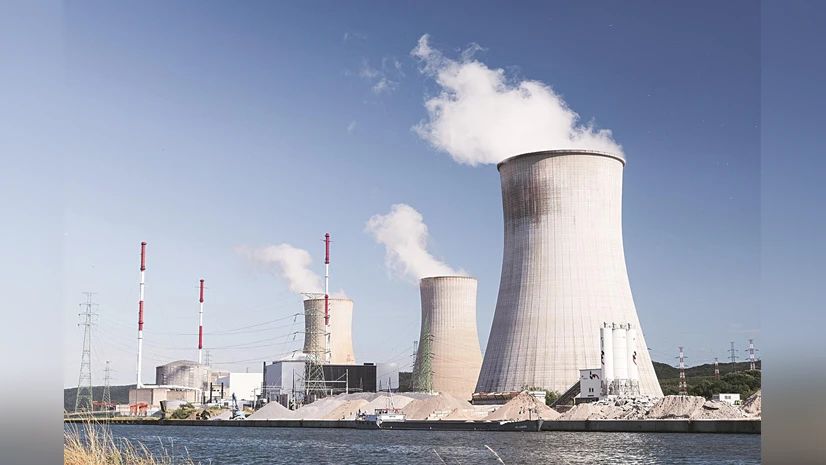
New Delhi, December 18: Parliament on Thursday approved the Sustainable Harnessing and Advancement of Nuclear Energy for Transforming India (SHANTI) Bill, marking a major shift in India’s nuclear power policy by allowing private companies to enter and operate in the sector. The legislation was passed after being cleared by the Lok Sabha on Wednesday and represents one of the most significant reforms in India’s nuclear energy framework in decades. The SHANTI Bill was introduced in Parliament earlier this week by Union Minister of State for Atomic Energy Jitendra Singh. The government said the law aims to modernise the nuclear sector, attract fresh investments, and support India’s long-term energy goals, including the target of achieving 100 gigawatts of nuclear power capacity by 2047. Under the new legislation, private companies will be eligible to apply for licences to construct, own, operate, and even decommission nuclear power plants and reactors in India. Until now, the operation of nuclear power plants was largely restricted to public sector enterprises, with limited scope for joint ventures. The new law expands this scope significantly by permitting a wide range of entities, including private firms and joint ventures, to participate in nuclear energy generation. According to the provisions of the Bill, companies seeking to operate nuclear facilities will need to obtain licences after receiving safety clearance related to radiation exposure and other regulatory requirements. The government has stressed that safety standards will remain strict and that regulatory oversight will continue to play a central role in the sector. One of the key changes proposed under the SHANTI Bill is the removal of a controversial liability clause related to suppliers of nuclear fuel and technology. The existing framework, governed by the Civil Liability for Nuclear Damage Act of 2010, had long been criticised for discouraging private and foreign investment due to uncertainty around liability in case of accidents. The new law seeks to create what it describes as a more practical and balanced civil liability regime for nuclear damage. The Bill also proposes rationalising the compensation amounts payable by plant operators in the event of a nuclear incident. The government believes that these changes will reduce financial risk, encourage participation from both domestic and global players, and help accelerate the growth of nuclear energy in India. In addition to opening the sector to private participation, the SHANTI Bill proposes the repeal of two existing laws — the Atomic Energy Act of 1962 and the Civil Liability for Nuclear Damage Act of 2010. By replacing these older laws, the government aims to create a unified and updated legal framework that reflects current technological, economic, and environmental realities. The legislation also includes provisions to amend the Patents Act of 1970 to allow for the grant of patents related to atomic energy. This move is expected to promote research, innovation, and technological development in the nuclear field. The Bill allows a wide range of entities to set up nuclear facilities. These include government departments, government-owned institutions or corporations, public sector companies, joint ventures, private firms, and other entities specifically permitted by the central government through official notification. The government has said that expanding nuclear power is essential for meeting India’s growing energy needs while reducing dependence on fossil fuels. Nuclear energy, it argues, offers a reliable and low-carbon source of power that can support economic growth and climate commitments. The passage of the SHANTI Bill has sparked debate, with supporters calling it a bold and necessary reform, while critics have raised concerns about safety, accountability, and the role of private players in a sensitive sector. The government, however, has maintained that strong regulations and oversight mechanisms will remain in place to address these concerns. With Parliament’s approval, the SHANTI Bill now sets the stage for a new chapter in India’s nuclear energy journey, opening the door to wider participation and aiming to strengthen the country’s long-term energy security. Parliament Clears SHANTI Bill, Opening India’s Nuclear Power Sector to Private Companies New Delhi, December 18: Parliament on Thursday passed the Sustainable Harnessing and Advancement of Nuclear Energy for Transforming India (SHANTI) Bill, marking a major shift in India’s nuclear power policy. The landmark legislation opens the nuclear energy sector to private companies for the first time, allowing them to construct, own, operate, and decommission nuclear power plants in the country. The Bill was introduced earlier this week by Union Minister of State for Atomic Energy Jitendra Singh and was cleared by the Lok Sabha on Wednesday before receiving final approval. The government said the move is aimed at boosting investment, modernising the sector, and helping India meet its long-term goal of achieving 100 GW of nuclear power capacity by 2047. Until now, nuclear power plants in India were operated only by public sector entities, with limited room for joint ventures. The SHANTI Bill expands this framework by permitting private companies and joint ventures to enter the sector, subject to strict safety approvals and licensing requirements. All operators will need regulatory clearance, especially on radiation safety and operational standards. A key feature of the Bill is the overhaul of the existing civil nuclear liability framework. It removes a long-debated liability clause that had discouraged private and foreign suppliers of nuclear fuel and technology. The new law proposes a more practical liability system and rationalises compensation payouts in case of accidents, reducing financial uncertainty for operators. The Bill also repeals the Atomic Energy Act of 1962 and the Civil Liability for Nuclear Damage Act of 2010, replacing them with a single updated legal framework. In addition, it proposes changes to the Patents Act, 1970, to allow patents related to atomic energy, encouraging innovation and research. The government says nuclear energy is crucial for meeting rising power demand while reducing carbon emissions. While the move has sparked debate, the Centre has assured that safety and regulatory oversight will remain non-negotiable as India enters a new phase in its nuclear journey.