Severe Winter Tightens Grip Across North India as Delhi Sees Coldest December Day, Schools Shut in UP and Timings Changed in Patna
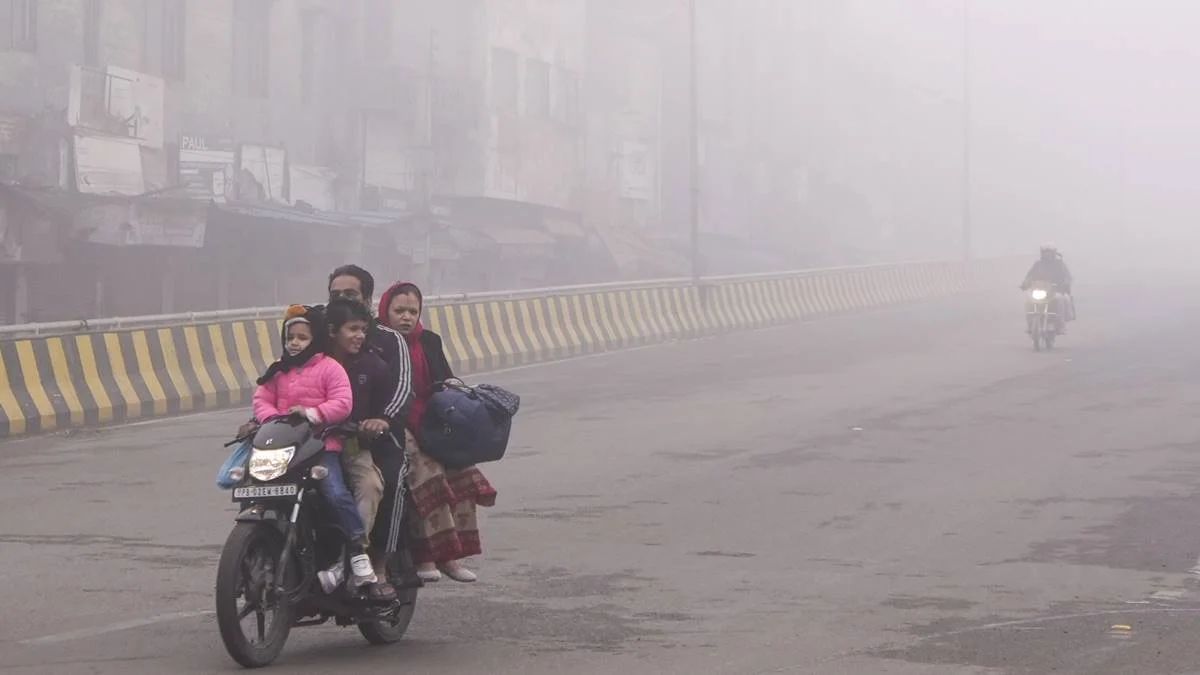
New Delhi, Dec 20: Winter conditions intensified across large parts of north and central India on Thursday, with biting cold, dense fog, and snowfall forecasts disrupting daily life. Delhi recorded its coldest December day of the season so far, while several districts in Uttar Pradesh and Bihar announced changes to school schedules amid warnings from the India Meteorological Department (IMD). According to the IMD, cold wave conditions are expected to persist over the next few days, accompanied by dense fog in the plains and snowfall in hilly regions. Alerts ranging from yellow to red have been issued across several states, urging people to remain cautious as temperatures continue to dip. In the national capital, Delhi witnessed its coldest December day of the ongoing winter season on Thursday. The maximum temperature settled at 20.1 degrees Celsius, which is 2.1 degrees below the normal average for this time of year. This marked a sharp drop compared to earlier days in December. The second-lowest maximum temperature this season was recorded on December 4 at 23.7 degrees Celsius. For comparison, Delhi had recorded a much lower maximum of 14.6 degrees Celsius in December last year. The IMD also issued a yellow alert for dense fog across Delhi on Friday. Weather officials said the city is likely to see a partly cloudy sky, with dense fog expected to linger until the forenoon hours, affecting visibility and early morning travel. In Uttar Pradesh, the cold wave situation turned more severe. The IMD issued a combination of red, orange, and yellow alerts across the state on December 19 and 20. Districts including Prayagraj, Azamgarh, Bareilly, Kushinagar, Deoria, Kanpur, and Etawah were placed under a red alert, indicating severe cold conditions. Orange alerts were issued for areas such as Meerut, Muzaffarnagar, Aligarh, and Mirzapur. Due to the extreme cold, the Bareilly district administration announced the closure of schools up to Class 8 for three days. The decision was taken to ensure the safety of young children as temperatures dropped sharply and fog reduced visibility during early morning hours. In neighbouring Bihar, the Patna district administration also made adjustments to school schedules. Schools in the city were directed to operate only between 9 am and 4.30 pm to protect students from the cold. However, classes appearing for board and pre-board examinations were exempted from this order, officials said. The IMD has also warned of changing weather conditions in the hilly regions of north India. Light rainfall or snowfall is likely over Jammu and Kashmir, Himachal Pradesh, and Uttarakhand between December 20 and 23. These conditions may further lower temperatures in nearby plains and contribute to prolonged cold spells. Dense fog is expected to continue in parts of Punjab, Haryana, and Uttar Pradesh over the coming days, potentially disrupting road, rail, and air travel. The IMD earlier noted that central India, along with parts of northwest and northeast India, may experience above-normal cold wave days this winter season. Meanwhile, Kashmir saw some temporary relief as night temperatures rose slightly above the freezing point. Reports said minimum temperatures across many areas in the valley stayed above zero degrees Celsius on Wednesday night. Srinagar recorded a minimum temperature of 0.2 degrees Celsius, offering brief comfort to residents. However, people in Kashmir are preparing for the onset of ‘Chillai-Kalan,’ the harshest 40-day winter period known for intense cold, snowfall, and rainfall. This phase is expected to bring tougher weather conditions, despite the short-lived rise in night temperatures. As winter deepens, authorities across states are closely monitoring weather updates and issuing advisories to minimize disruptions. With cold waves, fog, and snowfall expected to continue, residents are being advised to take precautions, limit early morning travel, and follow local guidelines to stay safe during the harsh winter spell. Severe Winter Tightens Grip Across North India as Delhi Sees Coldest December Day, Schools Shut in UP and Timings Changed in Patna Winter has tightened its grip across large parts of north India, bringing biting cold, dense fog, and major disruptions to daily life. Delhi recorded its coldest December day of the season so far as temperatures dropped below normal, while several states issued weather alerts and changed school schedules to protect children from the harsh conditions. According to the India Meteorological Department (IMD), Delhi’s maximum temperature settled at 20.1°C, making it the coldest December day of this winter in the capital. A yellow alert for dense fog has also been issued, with low visibility expected during early morning hours. Fog and cold air have already begun affecting traffic and daily routines in the city. Uttar Pradesh is facing more severe conditions, with the IMD issuing red, orange, and yellow alerts across several districts. Areas including Prayagraj, Bareilly, Kanpur, and Etawah are under red alert for cold wave conditions. In response, the Bareilly district administration ordered schools up to Class 8 to remain closed for three days to ensure student safety. In Bihar’s Patna, school timings were revised due to the cold. Schools will now operate only between 9 am and 4.30 pm, while board and pre-board exam classes have been exempted from this order. Authorities said the move was necessary as early mornings have become extremely cold and foggy. The IMD has also warned of snowfall and light rainfall in hilly regions, including Jammu and Kashmir, Himachal Pradesh, and Uttarakhand between December 20 and 23. Dense fog is expected to continue in parts of Punjab, Haryana, and Uttar Pradesh, adding to travel concerns. Meanwhile, Kashmir experienced slight relief as night temperatures rose just above freezing, with Srinagar recording a minimum of 0.2°C. However, residents are preparing for Chillai-Kalan, the harsh 40-day winter period known for intense cold and snowfall. As winter deepens, authorities are urging people to stay cautious, limit early travel, and take necessary precautions.