
India Conducts Successful Test of Nuclear-Capable K-4 Missile from INS Arighaat, Strengthening Sea-Based Deterrence
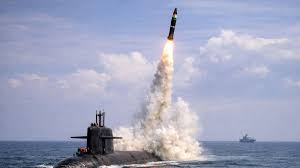
New Delhi | December 25 India has successfully carried out a test of the nuclear-capable K-4 submarine-launched ballistic missile (SLBM) from its nuclear-powered submarine INS Arighaat, significantly boosting the country’s strategic deterrence at sea, defence sources said on Wednesday. The missile was tested in the Bay of Bengal, off the coast of Visakhapatnam, under the operational control of the Strategic Forces Command. According to officials familiar with the development, the K-4 missile has an estimated strike range of around 3,500 kilometres. The successful launch marks a major step forward in strengthening India’s second-strike capability, which is a key pillar of its nuclear doctrine. The Defence Ministry has not issued an official statement on the test so far. This was the second successful test of the K-4 missile from INS Arighaat, following an earlier launch conducted last year. Defence experts said the repeated testing from an operational submarine platform brings the missile system closer to full operational readiness. The K-4 missile has been developed by the Defence Research and Development Organisation (DRDO) as part of India’s effort to build a credible and survivable nuclear deterrent. The missile is powered by solid fuel and is specifically designed to be deployed from India’s nuclear-powered submarines. Its extended range allows Indian submarines to strike distant targets while remaining safely concealed in deep waters, a critical requirement for ensuring retaliatory capability in the event of a nuclear attack. INS Arighaat, which was commissioned into the Indian Navy in August 2024, is India’s newest nuclear-powered ballistic missile submarine. With a displacement of around 6,000 tonnes, the submarine represents a significant upgrade in India’s undersea warfare and deterrence capabilities. The ability to carry K-4 missiles places INS Arighaat at the core of India’s sea-based nuclear force. Before INS Arighaat, India inducted its first nuclear-powered submarine, INS Arihant, into service in 2016. INS Arihant was armed with K-15 missiles, which have a shorter range of about 750 kilometres. While the K-15 marked an important beginning for India’s sea-based deterrent, defence planners have long viewed the longer-range K-4 as essential for achieving credible deterrence against distant adversaries. Earlier tests of the K-4 missile were carried out from submersible pontoons and test platforms. However, launches from an actual nuclear-powered submarine like INS Arighaat are seen as far more significant, as they validate the missile’s performance under real operational conditions. Defence sources said this shift from experimental launches to submarine-based firings indicates steady progress toward deployment. The successful test comes at a time when major global powers such as the United States, Russia, and China already operate submarine-launched ballistic missiles with ranges exceeding 5,000 kilometres. While India’s K-4 does not yet match those ranges, analysts believe it is a crucial step in narrowing the gap and enhancing India’s strategic balance in the region. Officials said the K-4 programme is part of a larger effort to strengthen India’s nuclear triad, which includes land-based missiles, air-delivered nuclear weapons, and sea-based systems. Among these, submarines are considered the most survivable platform, as they are difficult to detect and can remain hidden for long periods. The test is also seen as a message of India’s growing technological maturity in strategic weapon systems. By successfully integrating long-range nuclear missiles with indigenous nuclear-powered submarines, India is moving closer to ensuring that its deterrence remains credible, reliable, and effective. Defence sources indicated that further tests and evaluations may follow as part of the final stages before the missile system becomes fully operational. Once deployed, the K-4 is expected to play a central role in safeguarding India’s national security and reinforcing its position as a responsible nuclear power with a strong second-strike capability. India Conducts Successful Test of Nuclear-Capable K-4 Missile from INS Arighaat, Strengthening Sea-Based Deterrence India has successfully tested the nuclear-capable K-4 submarine-launched ballistic missile (SLBM) from its nuclear-powered submarine INS Arighaat, defence sources said. The missile was launched in the Bay of Bengal, off the coast of Visakhapatnam, under the operational control of the Strategic Forces Command. The Defence Ministry has not issued an official statement on the test so far. The K-4 missile has an estimated strike range of around 3,500 kilometres and is seen as a major boost to India’s second-strike nuclear capability. This was the second test of the missile from INS Arighaat, following an earlier launch conducted last year. Repeated successful tests indicate that the missile system is moving closer to full operational readiness. Developed by the Defence Research and Development Organisation (DRDO), the K-4 is a solid-fuel missile designed specifically for deployment on India’s nuclear-powered submarines. Its long range allows submarines to remain hidden deep at sea while still being capable of striking distant targets, which is a key requirement for a credible nuclear deterrent. INS Arighaat, commissioned into the Indian Navy in August 2024, is India’s latest nuclear-powered submarine. With a displacement of around 6,000 tonnes, the vessel significantly enhances India’s sea-based strategic capabilities. The submarine is designed to carry K-4 missiles, placing it at the centre of India’s nuclear deterrence at sea. India’s first nuclear-powered submarine, INS Arihant, commissioned in 2016, was equipped with shorter-range K-15 missiles with a range of about 750 kilometres. Earlier tests of the K-4 were conducted from submersible platforms, but launches from INS Arighaat mark an important step towards actual deployment. Countries such as the US, Russia, and China already operate longer-range SLBMs, and India’s K-4 programme is seen as vital to strengthening the country’s strategic balance and security.