
Gaganyaan and Artemis-II Missions Set to Redefine Human Spaceflight as India and the US Prepare Major Launches in 2026
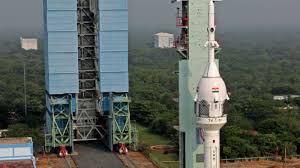
New Delhi | January 1, 2026 The year 2026 is expected to mark a major shift in the future of human spaceflight as India and the United States prepare two landmark missions that reflect very different, yet equally significant, ambitions in space. India’s Gaganyaan programme and NASA’s Artemis-II mission together signal a new chapter in how humans travel, work and explore beyond Earth. India’s space agency, the Indian Space Research Organisation (Isro), is aiming to conduct its first uncrewed orbital test of the Gaganyaan mission, known as G1, around March 2026. The mission is a crucial step toward India’s long-term goal of sending astronauts into space using fully indigenous technology. The G1 mission will fly aboard the human-rated LVM3 rocket and carry Vyommitra, a humanoid robot designed to simulate the role and functions of a human astronaut during flight. During the mission, the Gaganyaan spacecraft will operate in low Earth orbit at an altitude of about 300 to 400 kilometres. Isro will closely monitor critical systems, including life-support technology, onboard controls, communication systems and mission management from the ground. A key part of the test will be the safe re-entry of the crew module into Earth’s atmosphere, followed by parachute-assisted splashdown and recovery from the ocean. Officials say the success of G1 is essential before India attempts a crewed mission later in the decade. If successful, the mission will place India among a small group of nations that can independently launch, operate and safely bring back humans from space. Beyond national pride, the programme is expected to reduce reliance on foreign partners and open possibilities for future Indian space stations, research missions and even commercial human spaceflight. At the same time, thousands of kilometres away, the United States is preparing for Artemis-II, NASA’s first crewed mission under the Artemis programme. The mission is now scheduled for no earlier than February 5, 2026. Artemis-II will send four astronauts on a nearly 10-day journey around the Moon, marking humanity’s first crewed mission beyond low Earth orbit since the Apollo-17 mission in 1972. The astronauts aboard Artemis-II will travel aboard NASA’s Orion spacecraft, launched by the powerful Space Launch System rocket. The mission will take the crew at least 5,000 nautical miles beyond the Moon, farther than any human has ever travelled from Earth. The flight will test navigation, communication systems operating far from Earth, radiation exposure handling and long-duration life-support systems in deep space. NASA views Artemis-II as a critical proving mission that will validate systems needed for future lunar landings and, eventually, missions to Mars. The data collected will help refine safety measures and technologies for astronauts spending extended periods beyond Earth’s protective environment. While Gaganyaan focuses on strengthening India’s independent access to low Earth orbit, Artemis-II represents the United States’ return to deep space exploration with international cooperation. Together, the two missions reflect the emergence of a multipolar space era, where multiple nations are shaping the future of human spaceflight rather than relying on a single dominant player. Experts say the technologies and experience gained from these missions will influence space travel well into the 2030s. Advances in crew safety, spacecraft design, mission planning and recovery systems are expected to benefit commercial spaceflight, national space stations and future deep-space exploration. As 2026 approaches, Gaganyaan and Artemis-II stand as powerful symbols of ambition, innovation and cooperation, showing how space exploration continues to evolve while pushing humanity closer to becoming a true spacefaring civilisation. Gaganyaan and Artemis-II Missions Set to Redefine Human Spaceflight as India and the US Prepare Major Launches in 2026 The year 2026 is shaping up to be a game-changer for human spaceflight as India and the United States prepare two powerful missions that point to the future of space exploration. India’s Gaganyaan programme and NASA’s Artemis-II mission may have different goals, but together they signal a new era beyond Earth. India’s space agency, Isro, is targeting its first uncrewed orbital test of Gaganyaan, called G1, around March 2026. The mission will fly on the human-rated LVM3 rocket and carry Vyommitra, a humanoid robot built to simulate astronaut activities. The spacecraft will orbit Earth at around 300–400 km, allowing Isro to test life-support systems, crew controls, communication, re-entry, parachute deployment and ocean recovery. A successful G1 mission will clear the path for India’s first human spaceflight later in the decade and place the country among a small group with independent human launch capability. On the other side of the world, NASA is preparing Artemis-II, scheduled for no earlier than February 5, 2026. The mission will carry four astronauts on a nearly 10-day journey around the Moon aboard the Orion spacecraft. It will be the first crewed mission beyond low Earth orbit since 1972. The astronauts will travel farther than any human has before, testing deep-space navigation, radiation safety, long-duration life-support and communication systems. Together, Gaganyaan and Artemis-II highlight a multipolar space future. While India strengthens access to low Earth orbit, the US pushes humans back into deep space. The lessons from both missions will shape space stations, commercial flights and deep-space travel in the years to come.