
Voyager 1 to Reach One Light-Day From Earth in 2026, Marking a Historic Milestone in Space Exploration
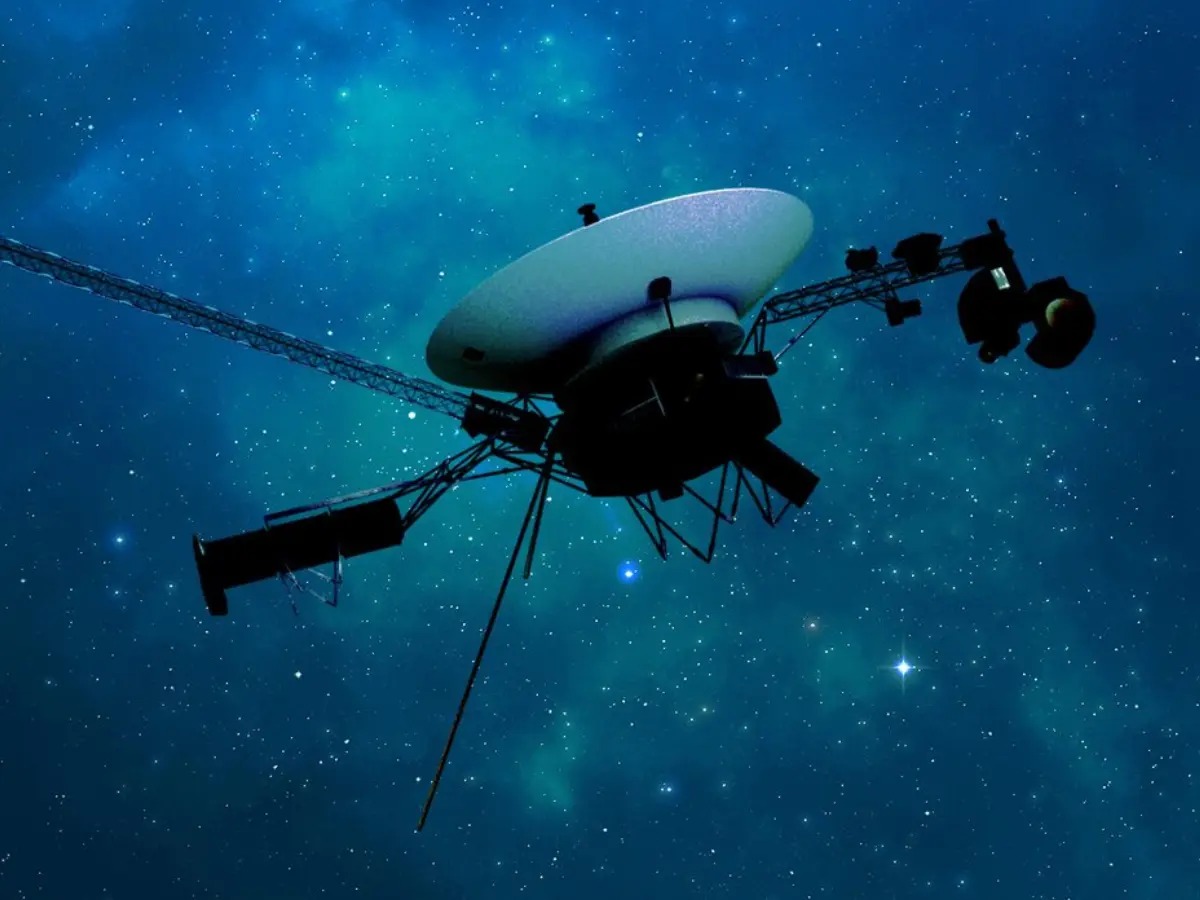
New Delhi | January 2, 2026 Nasa’s Voyager 1, the most distant human-made object ever sent into space, is set to achieve a historic milestone in 2026 when it crosses the one light-day distance from Earth. By mid-November next year, the spacecraft will be nearly 26 billion kilometres away, meaning radio signals sent from Earth will take a full 24 hours to reach it, highlighting the vast scale of space and the longevity of the mission. Voyager 1’s journey to this point represents nearly five decades of exploration beyond our home planet. Launched on September 5, 1977, the spacecraft was initially designed for a four-year mission to study Jupiter and Saturn. However, it far exceeded expectations, transforming our understanding of the outer solar system and continuing its journey into deep space long after its primary mission ended. A light-day refers to the distance light travels in 24 hours through a vacuum. Since light moves at roughly 300,000 kilometres per second, one light-day equals about 26 billion kilometres. Voyager 1 is currently around 25.55 billion kilometres from Earth, and signals already take approximately 23 hours and 40 minutes to reach it. Once it crosses the one light-day mark, communication will officially require a full day each way. This milestone is symbolic but powerful. It means that any command sent from Nasa’s mission control in California will take 24 hours to reach Voyager 1, and the spacecraft’s response will take another 24 hours to return. This 48-hour communication delay underlines how isolated the probe is as it travels through interstellar space, far beyond the planets and the Sun’s immediate influence. Voyager 1 entered interstellar space in 2012 after crossing the heliopause, the boundary where the Sun’s solar wind gives way to the space between stars. At its current distance, the Sun would appear only as an unusually bright star in an otherwise dark sky. Despite this isolation, the spacecraft continues to send valuable scientific data back to Earth. The probe travels at an incredible speed of about 61,155 kilometres per hour. Even at this pace, the distances involved are so vast that Voyager 1 will take another 300 years to reach the inner edge of the Oort Cloud, a distant region of icy bodies surrounding the solar system. It may take up to 30,000 years to completely pass beyond it. Voyager 1 is powered by a radioisotope thermoelectric generator, a nuclear battery that slowly loses power over time, dropping by about four watts each year. To keep the spacecraft operational, Nasa engineers have carefully shut down non-essential systems and older instruments. These adjustments have allowed Voyager 1 to continue functioning far beyond its expected lifespan. In May 2024, engineers achieved another remarkable feat by fixing a serious issue from billions of kilometres away. They successfully bypassed a damaged memory chip that had caused Voyager 1 to send back meaningless data. This repair restored normal communication and extended the mission’s ability to study cosmic rays and magnetic fields in interstellar space. Even today, Voyager 1 continues to act as humanity’s distant observer, exploring a region no spacecraft has studied before. It also carries the famous Golden Record, a collection of sounds and images from Earth intended as a message to any intelligent life it might encounter in the far future. As Voyager 1 approaches the one light-day mark in 2026, it stands as a powerful reminder of human curiosity, engineering skill, and the desire to explore beyond known boundaries. The spacecraft’s journey remains one of the greatest achievements in the history of space exploration. Voyager 1 to Reach One Light-Day From Earth in 2026, Marking a Historic Milestone in Space Exploration NASA’s Voyager 1, the most distant human-made object in history, is set to cross an extraordinary milestone in 2026. By mid-November next year, the spacecraft will be one light-day away from Earth, a distance of nearly 26 billion kilometres. This means any radio signal sent from Earth will take a full 24 hours to reach the probe, and another 24 hours for its reply to come back. Voyager 1 was launched on September 5, 1977, with a planned mission of just four years to study Jupiter and Saturn. Instead, it went on to rewrite space history. The spacecraft revealed active volcanoes on Jupiter’s moon Io, detailed Saturn’s rings, and then continued its long journey away from the Sun. In 2012, it crossed the heliopause and became the first spacecraft to enter interstellar space. At its current distance of about 25.55 billion kilometres, signals already take nearly 24 hours to reach Voyager 1. Once it crosses the one light-day mark, the communication delay will officially become a full day each way. Despite being so far away that the Sun appears as just a bright star, Voyager 1 remains connected to Earth through faint radio signals. The spacecraft travels at around 61,155 kilometres per hour and is powered by a nuclear battery that slowly loses energy each year. NASA engineers have kept it alive by turning off non-essential systems and fixing problems from billions of kilometres away. In 2024, they even managed to bypass a damaged memory chip, restoring its data flow. Voyager 1 continues to study cosmic rays and magnetic fields in the space between stars. It also carries the famous Golden Record, a message from Earth for any future intelligence. Nearly five decades later, Voyager 1 is still exploring, proving that human curiosity truly has no limits.