India-US Trade Deal: India to Import $500 Billion in American Goods, Boosting Strategic Partnership
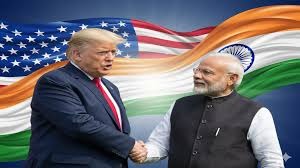
New Delhi | 8 Feb 2026 In a landmark development, the long-awaited India-US trade deal has clarified a key question worth $500 billion: what India will import from the United States. While the agreement had earlier reduced US tariffs on Indian goods from 50 per cent to 18 per cent, details about India’s commitments were unclear. A joint statement on Saturday provided a detailed framework, confirming tariff reductions, market-opening measures, and a deeper economic partnership between the two countries. Under the deal, India has committed to purchasing $500 billion in American goods over the next five years. The imports will include energy products, aircraft and aircraft parts, precious metals, technology items such as graphics processing units (GPUs) used in AI applications and data centres, and coking coal. “India intends to purchase” these goods, with the US taking the commitment “with its best endeavour to meet the obligation,” according to the statement. Commerce ministry officials noted that while India already imports most of these products, current imports stand at around $300 billion annually, with demand expected to rise sharply in the coming years. Commerce Minister Piyush Goyal described the framework as “historic” and “very fair, equitable and balanced.” He said the reduced tariffs will benefit labour-intensive sectors such as textiles, apparel, leather, footwear, plastics, and rubber, restoring their competitiveness against countries like Bangladesh, China, and Vietnam. The agreement also allows zero duties on Indian exports like gems and diamonds, generic pharmaceuticals, and aircraft parts starting March 2026. Indian MSMEs, farmers, fishermen, youth, women, and skilled workers are expected to gain significantly from these trade opportunities. The framework also protects Indian farmers through “carefully crafted exceptions,” shielding sensitive agricultural and dairy products. It forms part of the ambitious ‘Mission 500’ initiative, which aims to more than double bilateral trade to $500 billion by 2030. Goyal emphasized that both countries have agreed on safeguards, allowing each side to modify commitments if tariffs are changed unilaterally, ensuring a balanced and mutually beneficial trade relationship. This agreement positions India strategically and competitively among global markets while opening huge opportunities for growth across multiple sectors. India-US Trade Deal: India to Import $500 Billion in American Goods, Strengthening Economic Ties The India-US trade deal has finally answered the $500 billion question: what India will import from the United States. While the agreement had already cut US tariffs on Indian goods from 50 per cent to 18 per cent, it was not clear what New Delhi would buy in return. A joint statement released on Saturday laid out the framework, confirming tariff reductions, zero duties on select products, market-opening measures, and a stronger economic partnership between the two nations. Under this agreement, India has committed to purchasing $500 billion worth of American products over five years. These include energy products, aircraft and aircraft parts, precious metals, technology products like graphics processing units (GPUs) used in AI applications and data centres, and coking coal. India “intends to purchase” these items, while the US will meet the commitment “with its best endeavour to meet the obligation,” the statement said. Officials highlighted that while India already imports most of these products, imports currently stand at $300 billion annually, with demand expected to rise sharply, creating a “win-win situation.” Commerce Minister Piyush Goyal called the framework “historic” and “very fair, equitable and balanced.” He explained that reduced tariffs will benefit labour-intensive sectors such as textiles, apparel, leather, footwear, plastics, and rubber, giving Indian exporters an edge over countries like China, Bangladesh, and Vietnam. The deal also allows zero duties on gems and diamonds, generic pharmaceuticals, and aircraft parts starting March 2026. MSMEs, farmers, fishermen, youth, women, and skilled workers in India are expected to benefit significantly from these opportunities. The agreement also protects Indian farmers through “carefully crafted exceptions” for sensitive agricultural and dairy products. It forms part of the ‘Mission 500’ initiative, aimed at doubling bilateral trade to $500 billion by 2030. Goyal added that both countries agreed on safeguards, allowing them to adjust commitments if tariffs change unilaterally, ensuring a balanced trade relationship. “This framework opens huge opportunities for India while keeping our interests secure,” he said.