Modi Sets Vision for India as a Global Space Hub
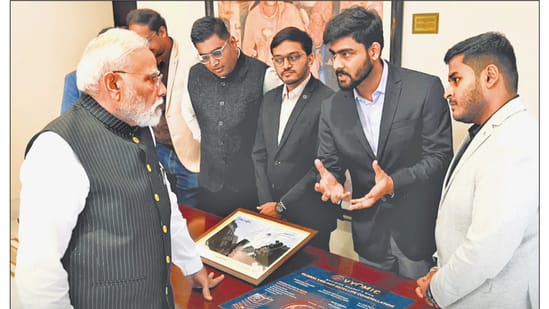
New Delhi, August 24, 2026 Prime Minister Narendra Modi has outlined an ambitious vision for India’s space sector, urging private companies to help build an ecosystem capable of attracting global talent and investment. During an interaction with CEOs and founders of 20 private space firms, Modi stressed that India’s competitive costs, strong talent base and growing culture of innovation could position the country as a major global destination for space start-ups and advanced technologies. “We must create such an aura that people all over the world feel that if they want to build their life, they should come to Hindustan. Join some Indian start-up. Join some Indian space agency,” he said during the interaction held on Friday, details of which were released on Sunday. The discussion came around National Space Day, observed on August 23 to mark the Chandrayaan-3 mission and the successful soft landing of the Vikram Lander on the Moon. Since opening the space sector to private participation in 2020, India has expanded opportunities across satellites, launch systems and space applications. Government figures show that the number of private space start-ups has grown from one in 2014 to 440, while the Indian Space Policy 2023 further widened private participation across the sector. In his opening remarks, Modi said entrepreneurs had placed their trust in the government and shown courage by entering a relatively new field. “My view has always been that whatever decisions we take, we must remain consistent in them… so that anyone who wants to take a risk can have confidence... And this was our effort –– to create that trust,” he said. With the global space industry estimated at $600 billion, India currently holds a share of around $9 billion, which the government aims to increase to $40-45 billion over the next decade. Private investment has also risen sharply, increasing from $100.5 million in 2021–22 to $618.5 million by March 31, 2026. “In cost we are very competitive, in talent there is no question at all, and the risk-taking capacity of our people is anyway greater. And because of that we can very quickly make our place,” Modi said. The interaction brought together companies including Skyroot Aerospace, Agnikul Cosmos, Pixxel, Dhruva Space and GalaxEye, whose future plans range from removing inactive satellites and developing docking and refuelling technology to manufacturing pharmaceuticals in space. Skyroot Aerospace, which carried out India’s first private rocket launch in July, also outlined plans to increase its launch frequency. Industry leaders highlighted the expanding use of space technology in areas such as agriculture, propulsion systems and global ground-station networks, alongside rising international contracts and investor confidence. “Now the world must be searching for India’s start-ups, wondering who is behind this. Because when there is a breakthrough, immediately people’s attention goes there,” Modi also said. The growing partnership between government support and private innovation is now shaping India’s larger ambition of becoming a significant force in the rapidly expanding global space economy.