UP Government Assures Faster Wage Payments and More Workdays for Rural Job Scheme Workers
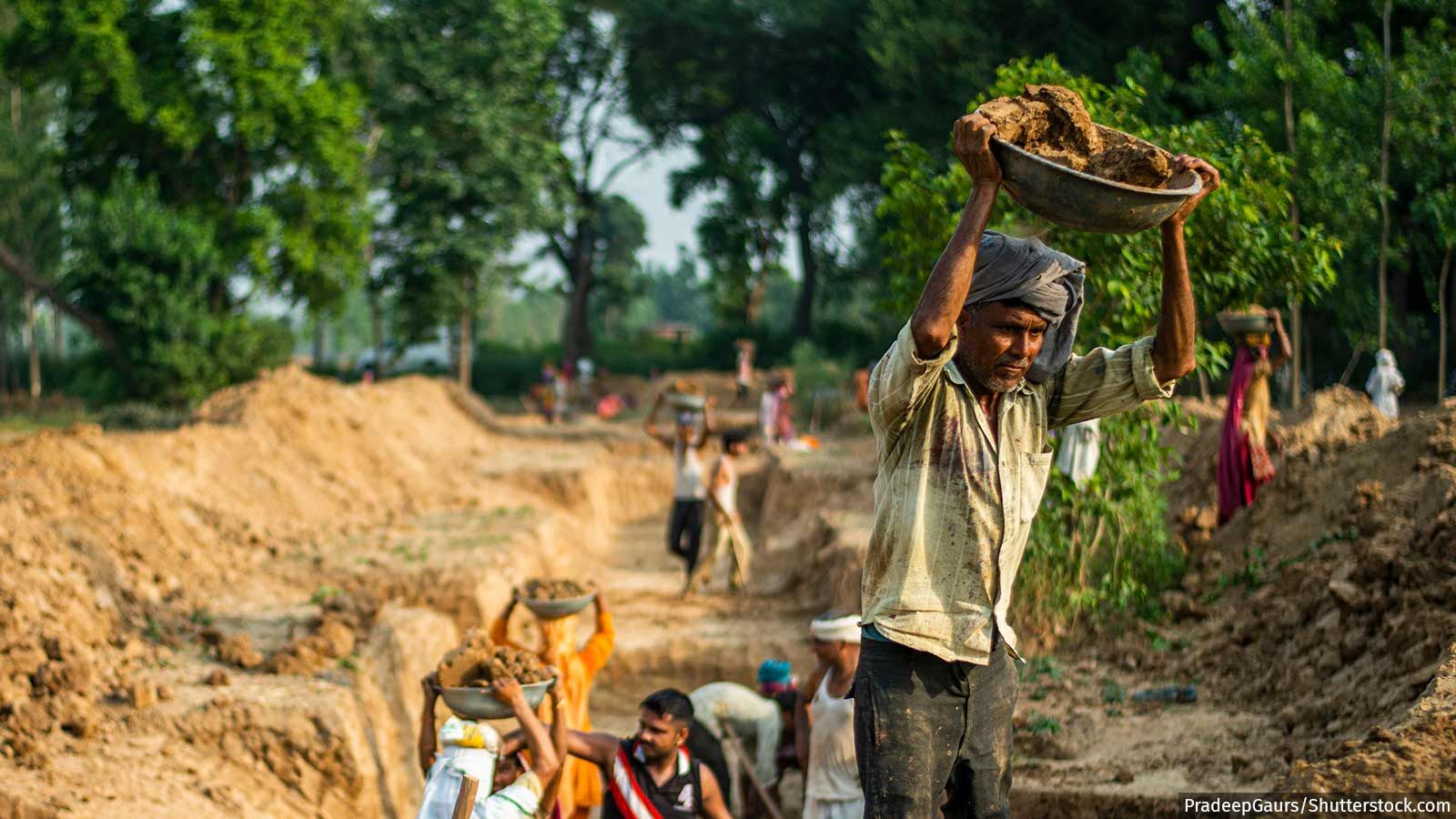
Lucknow | December 24, 2025 The Uttar Pradesh government on Tuesday informed the state Assembly that workers employed under the rural job scheme will now receive their wages within seven days instead of the earlier 15-day period. The state government also announced that the guaranteed number of workdays under the scheme will be increased from 100 to 125 days, offering additional relief to rural workers who depend on the programme for livelihood support. The announcement was made during the Question Hour in the Uttar Pradesh Legislative Assembly by minister of state for rural development Vijay Lakshmi Gautam. She was responding to a question raised by Samajwadi Party (SP) MLA Anil Pradhan, who sought clarity on wage payments, wage rates, and the overall implementation of the Mahatma Gandhi National Rural Employment Guarantee Act (MGNREGA) in the state. The minister said that the daily wage rate for MGNREGA workers in Uttar Pradesh has been fixed at ₹252, as notified by the central government. She clarified that the state government does not have the authority to revise wage rates, as wage fixation under the scheme falls entirely under the jurisdiction of the Centre. Addressing demands raised by Pradhan to increase the daily wage to ₹700 in view of rising inflation and to extend the employment guarantee to 300 days annually, Gautam said such decisions cannot be taken by the state. She explained that both wage determination and the maximum number of workdays are decided by the central government, and therefore no increase in wages is expected at the state level. Pradhan, however, argued that the MGNREGA scheme plays a crucial role in helping economically weaker sections become self-reliant. He alleged that changes in central guidelines had reduced financial support, stating that earlier the Centre bore the full cost of wages. He also claimed that nearly ₹200 crore in wages was pending for workers in Uttar Pradesh and questioned how labourers were expected to manage their daily needs amid rising prices. During the discussion, the minister also briefly referred to the history of the scheme, stating that before 2009 it was known as NREGA and was later renamed to include Mahatma Gandhi. The Assembly session also saw questions related to education and school infrastructure. Responding to a query by SP MLA Samarpal Singh on the introduction of English-medium education in government schools on the lines of CBSE and ICSE, minister of state for basic education (independent charge) Sandeep Singh said that English is already taught as a subject in all government schools. He explained that before the National Education Policy (NEP), over 12,000 government schools had been converted into English-medium institutions. Under the NEP, teaching is encouraged in the local or regional language up to Class 5 or 8 wherever possible, but English continues to be part of the curriculum. Singh added that the state government is taking all necessary steps to improve the quality of education. Singh also highlighted improvements in school infrastructure, stating that many schools were in poor condition under previous governments. He said the BJP government launched “Operation Kayakalp” to upgrade facilities and assured that by this year, all government schools in the state will have proper furniture. Concerns were raised by SP MLA Ragini Singh about teacher shortages, pointing out that over 9,500 schools across Uttar Pradesh have only one teacher or are running with the help of shiksha mitras. Other MLAs questioned the availability of furniture and the high fee structure in private schools, which they said was unaffordable for poor families. In response, Sandeep Singh said district-level committees under district magistrates are monitoring private school fees, and action has been taken in several districts against schools found overcharging. The government also shared data on admissions under the Right to Education (RTE) Act, stating that over 1.40 lakh children from economically weaker sections have been admitted to private schools in the current academic year. The steady rise in admissions over recent years, the minister said, reflects improved implementation of the RTE Act. Overall, the Assembly discussion highlighted key concerns around rural employment, education, and welfare, with the government assuring faster wage payments and increased work opportunities for rural workers while pointing to ongoing efforts to improve schools and access to education. UP Government Assures Faster Wage Payments and More Workdays for Rural Job Scheme Workers The Uttar Pradesh government has announced key changes to improve the rural job scheme, offering relief to thousands of workers across the state. During the Question Hour in the state Assembly, the government said that wages under the Mahatma Gandhi National Rural Employment Guarantee Act (MGNREGA) will now be paid within seven days, instead of the earlier 15-day timeline. The state also confirmed that the guaranteed number of workdays under the scheme will be increased from 100 to 125 days. The announcement was made by Minister of State for Rural Development Vijay Lakshmi Gautam while responding to questions raised by Samajwadi Party MLA Anil Pradhan. The minister clarified that the daily wage rate for MGNREGA workers in Uttar Pradesh is ₹252, as fixed by the central government. She said the state does not have the authority to revise wage rates, as both wage fixation and the maximum number of workdays fall under the Centre’s control. This came in response to demands to raise daily wages to ₹700 and extend work guarantees to 300 days due to rising inflation. Opposition members argued that MGNREGA is crucial for the economic survival of poor families and claimed that nearly ₹200 crore in wages is still pending in the state. They questioned how workers are expected to manage their livelihoods with delayed payments and rising costs. The Assembly session also saw discussions on education. Basic Education Minister Sandeep Singh said all government schools already teach English as a subject and that infrastructure has improved under “Operation Kayakalp.” He added that all government schools will have furniture this year. The government also shared that over 1.40 lakh children from economically weaker sections have been admitted to private schools under the Right to Education Act in the current academic year. Faster payments, more workdays, and rising expectations — all eyes are now on how quickly these promises turn into reality.