January 27 Bank Strike Explained: Why Employees Are Protesting and How It Affects Customers
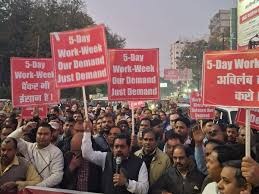
New Delhi | January 26,2026 Banking services across the country may face disruption on January 27 as bank employee unions have called for a nationwide strike. The strike was announced on January 23 to press for a long-pending demand of a uniform five-day workweek. If the strike goes ahead as planned, it is expected to significantly impact public sector banks, many of which have already informed customers about possible service interruptions. The disruption could be more severe because banks will remain closed for three consecutive days. January 25 is a Sunday, January 26 is a holiday due to Republic Day, and January 27 falls on the strike day. This means customers of public sector banks may face difficulties in branch-related services for an extended period. However, branches of major private banks such as HDFC Bank, ICICI Bank, and Kotak Mahindra Bank are unlikely to be affected. The strike call has been given by the United Forum of Bank Unions (UFBU), an umbrella body representing nine major bank employee and officer unions. The UFBU said it is going ahead with the strike as discussions with the chief labour commissioner did not lead to any resolution. According to the unions, the key demand is a uniform five-day workweek for banks, similar to other financial and government institutions. Currently, bank employees get the second and fourth Saturdays off, while working six days a week for the rest of the month. The unions argue that during the wage revision settlement in March 2024, the Indian Banks’ Association and UFBU had agreed in principle to make all Saturdays holidays. “It is unfortunate that the government is not responding to our genuine demand. There would be no loss of man-hours as we have agreed to work an extra 40 minutes daily from Monday to Friday,” UFBU had said earlier this month. The UFBU has also pointed out that institutions like the RBI, LIC, GIC, stock exchanges, and government offices already follow a five-day work schedule. According to the unions, there is no valid reason for banks to continue with a longer workweek, especially when employees are willing to adjust working hours to ensure productivity is not affected. January 27 Bank Strike: Why Unions Are Protesting and What Customers Should Know Banking services across India may be affected on January 27 as bank employee unions have announced a nationwide strike. The strike, declared on January 23, is aimed at pressing the long-pending demand for a uniform five-day workweek in banks. If the strike goes ahead, it is expected to cause inconvenience mainly in public sector banks, many of which have already warned customers about possible service disruptions. The impact of the strike could be wider because banks will remain closed for three days in a row. January 25 is a Sunday, January 26 is a holiday due to Republic Day, and January 27 will be the strike day. Because of this, customers who rely on branch services of public sector banks may face delays. However, private banks such as HDFC Bank, ICICI Bank, and Kotak Mahindra Bank are expected to function normally. The strike has been called by the United Forum of Bank Unions (UFBU), which represents nine major unions of bank employees and officers. The UFBU said it decided to go ahead with the strike after talks with the chief labour commissioner failed to produce any result. The main demand of the unions is the introduction of a five-day workweek for banks, similar to other financial institutions. At present, bank employees get the second and fourth Saturdays off, while working six days a week during the rest of the month. The unions said that during the wage revision settlement in March 2024, the Indian Banks’ Association and UFBU had agreed to this demand. “It is unfortunate that the government is not responding to our genuine demand. There would be no loss of man-hours as we have agreed to work an extra 40 minutes daily from Monday to Friday,” the UFBU had said earlier.