From Sukarno to EU Leaders: How Republic Day Mirrors India’s Foreign Policy
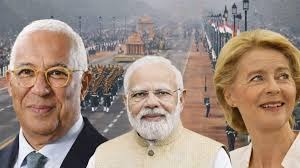
New Delhi | January 25,2026 India is all set to celebrate its 77th Republic Day on 26 January, the day the country adopted its constitution and officially became a republic. The event marks India’s break from colonial rule and celebrates the values of democracy. The grand parade in Delhi is a major attraction, with tanks rolling by, fighter jets flying overhead, and thousands of spectators lining the streets. But beyond the military display, attention is also focused on who sits in the most important seats at the ceremony. This year, European Commission President Ursula von der Leyen and European Council President António Costa will be the chief guests. India’s decision to invite them puts the European Union at the center of one of the country’s most important state events. The Republic Day parade is not just a celebration; it is also a diplomatic stage. Thousands of soldiers march on the Kartavya Path, colourful floats display India’s culture and heritage, and millions watch the event on television. The parade is led by the Indian president, with the chief guest seated right next to the presidential chair. Over time, the choice of chief guest has become a key indicator of India’s foreign policy priorities and the relationships Delhi wants to highlight. The tradition started in 1950 when Indonesia’s President Sukarno attended India’s first Republic Day parade. In its early years, India focused on building relations with other newly independent countries, and the choice of chief guests reflected this priority. Over the decades, leaders from many countries, including the US, UK, France, Russia, and neighbouring nations like Bhutan and Sri Lanka, have been invited. The UK has been invited five times, including Queen Elizabeth II and Prince Philip, showing the long and complex ties between the two nations. Similarly, France and Russia (formerly the Soviet Union) have been invited nearly five times, reflecting strong strategic links. Experts say the process of choosing the chief guest is kept mostly private. It begins in the foreign ministry, which prepares a shortlist. The final decision is made by the Prime Minister’s Office and can take several months. A former foreign ministry official said the decision depends on “Strategic objectives, regional balance and whether a country has been invited before.” Former Indian ambassador to the US Navtej Sarna added that the choice balances important partners, neighbours, and major powers, and also depends on the availability of the visiting leader. Foreign policy analyst Harsh V Pant believes the guest list shows how India’s global engagement is changing. He said that inviting the EU leaders signals that India is “doubling down on our engagement with the EU.” He also suggested that a major trade deal could be announced, showing that India and the European bloc are aligned on current global issues. India is also working on a trade deal with the US, but talks have been challenging, especially after the US imposed high tariffs on Indian goods. The Republic Day parade also reflects India’s broader diplomatic message. In 2018, India invited leaders of the ASEAN countries as chief guests, marking 25 years of engagement with the bloc. The absence of certain countries has also spoken volumes. Pakistan has not been invited since the war of 1965, and China has been invited only once, in 1958, before the two countries fought a border war. What makes India’s Republic Day unique is that it is not focused on military victories like many other countries’ parades. France celebrates the start of the French Revolution, Russia celebrates victory in World War Two, and China marks its victory over Japan. India, however, celebrates the adoption of its constitution. As Harsh V Pant said, India celebrates “becoming a constitutional democracy.” The parade also mixes military strength with cultural diversity through regional tableaux and performances. Beyond strategy and symbolism, the event often leaves a lasting personal impression on visiting leaders. A former official recalled that the Obamas were particularly amazed by the camel-mounted contingents, a memory that stayed with them long after the ceremony ended. From Sukarno to EU Leaders: How Republic Day Mirrors India’s Foreign Policy India is set to celebrate its 77th Republic Day on 26 January, the day it adopted its constitution and became a republic. Every year, the grand parade in Delhi draws huge crowds, with military tanks, marching soldiers, and fighter jets creating a powerful spectacle. But beyond the parade itself, the spotlight often falls on who is sitting next to the President, as the chief guest choice reflects India’s foreign policy priorities. This year, European Commission President Ursula von der Leyen and European Council President António Costa will be the chief guests, putting the European Union at the center of India’s most prestigious national event. The guest list for Republic Day has always been symbolic, showing which countries India wants to highlight at a particular time. Over the decades, the parade has hosted leaders from neighbouring nations, major global powers, and even regional groups like ASEAN. The selection of the chief guest is not public and usually begins within the foreign ministry. A shortlist is made and the final decision is taken by the Prime Minister’s office. Former diplomats say the choice is based on strategic goals, regional balance, and whether the country has been invited before. Former Indian ambassador to the US, Navtej Sarna, said it is a careful balancing act between key partners, neighbours, and major powers. Foreign policy analyst Harsh V Pant believes that India inviting EU leaders shows a strong focus on EU ties. He also suggested that a major trade deal may be announced during the visit, highlighting the growing closeness between India and the European bloc. This comes while India is also negotiating with the US on a trade deal, which has faced challenges due to tariffs and other issues. Experts say the Republic Day guest list also reflects wider trends, including India’s continuing engagement with the global south and its focus on constitutional democracy rather than war victories. The parade is a unique mix of military strength and cultural diversity, and for many visiting leaders, it leaves a lasting impression long after the ceremony ends.