
Glacial Collapse, Not Earthquake, Triggered Nepal Floods
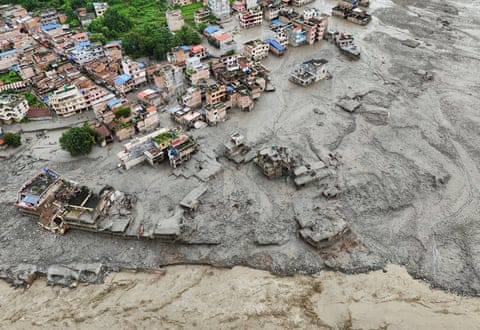
New Delhi, August 27, 2026 The devastating flash floods that struck Nepal were triggered by a glacial collapse and debris flow, not by a 4.4-magnitude earthquake as initially reported. A fresh analysis by the US Geological Survey (USGS) has revised the cause of the disaster, which left a massive trail of destruction in parts of Nepal. The flash floods, originating in Tibet on Wednesday, severely affected Nepal’s Rasuwa and Dhading districts. At least 162 people were killed, while 750 others, including 133 Indian nationals, remain missing. The USGS said further examination of nearby seismic stations, long-period seismic waves and satellite imagery confirmed that no earthquake had occurred. “This event was initially reported as a magnitude 4.4 earthquake. Additional analysis of nearby seismic stations, long period seismic waves, and satellite imagery led to the determination that the seismic event was instead a glacial collapse and debris flow, and that no earthquake had occurred,” the USGS said in an update to its note on the event. The agency also revised the magnitude of the seismic event from 4.4 to 5.2. “The USGS determined that the seismic event was a glacial collapse and debris flow that caused subsequent catastrophic impacts downstream,” it said. Daniel Shugar, an Associate Professor of geomorphology at the University of Calgary in Canada, said the flash floods were triggered after a glacier rolled off a cliff at an altitude of 5,200 metres. “Comparing satellite imagery from yesterday and today, the glaciers in the vicinity do seem to have lost a fair bit of snow in the last 24 hours,” Shugar was quoted as saying by the New Scientist magazine. “My guess is that snow melt, and glacier ice melt as well, injected a lot of liquid water into the glacier, which percolated down to the bed and lubricated it. That was enough for it to collapse,” he said. The updated findings now point to the glacial collapse as the key trigger behind the catastrophe, underlining how a sudden event in the high Himalayas can unleash devastating consequences downstream.