Sonia Gandhi Criticises Modi Government’s G RAM G Bill, Vows to Defend MGNREGA and Rural Livelihoods
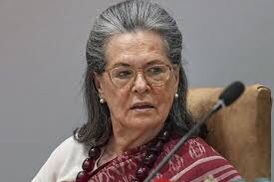
New Delhi, December 20: Congress Parliamentary Party Chairperson Sonia Gandhi on Saturday launched a strong attack on the Narendra Modi-led government over the proposed G RAM G Bill, calling it unjust and harmful to rural livelihoods. Addressing party workers and supporters, she stated that she had fought for the rights of the poor in the past and would continue to do so against what she described as a “black law” undermining the Mahatma Gandhi National Rural Employment Guarantee Act (MGNREGA). Gandhi recalled that MGNREGA, enacted nearly two decades ago during the tenure of former Prime Minister Manmohan Singh, was passed in Parliament with broad consensus. She described it as a revolutionary legislation that benefited millions of rural families, particularly the most deprived, exploited, and marginalized communities across India. The Congress leader highlighted that MGNREGA has provided a vital source of livelihood for rural households, curbed distress migration by allowing people to find work within their villages, and established a legal right to employment. She said the law also strengthened gram panchayats and took the nation closer to Mahatma Gandhi’s vision of Gram Swaraj, emphasizing local self-governance and community empowerment. Sonia Gandhi sharply criticised the Modi government, alleging that over the past 11 years, successive policies have sought to weaken MGNREGA by ignoring the needs of unemployed, poor, and marginalized rural populations. She pointed out that during the Covid-19 pandemic, the scheme acted as a crucial lifeline for millions who faced economic hardships. Expressing concern over recent amendments, she said the government had “bulldozed” the act by removing Mahatma Gandhi’s name and altering the law’s structure without consultation, discussion, or seeking the opposition’s input. Gandhi argued that these changes would centralize control in Delhi, with decisions regarding employment allocation, duration, and location being removed from local authorities and communities, thereby detaching policy from ground realities. She emphasised that MGNREGA was never a tool for political gain but a law designed to serve the national interest and protect rural livelihoods. The Congress leader accused the government of undermining the interests of crores of farmers, labourers, and landless rural poor through these amendments. Vowing to resist the changes, Gandhi said she and the Congress party were committed to opposing the G RAM G Bill, just as they had fought two decades ago to secure employment rights for the rural poor. She stated that party leaders and lakhs of workers stood united with the people in defending MGNREGA and ensuring rural employment rights remain protected. Concluding her address, Sonia Gandhi reaffirmed her resolve to fight any move that diluted employment rights for rural communities. She reiterated Congress’s commitment to supporting farmers, workers, and marginalized groups, ensuring their livelihoods are safeguarded against policies she described as regressive. The speech marked a renewed political confrontation over rural employment laws and highlighted the Congress party’s stance to actively oppose legislative changes perceived as detrimental to India’s rural population. Sonia Gandhi Criticises Modi Government’s G RAM G Bill, Vows to Defend MGNREGA and Rural Livelihoods Congress Parliamentary Party Chairperson Sonia Gandhi on Saturday strongly criticised the Narendra Modi government over the proposed G RAM G Bill, calling it a “black law” that threatens the livelihoods of rural communities. Speaking to party workers and supporters, she said she had fought for the poor before and would continue to do so to protect the Mahatma Gandhi National Rural Employment Guarantee Act (MGNREGA). Gandhi recalled that MGNREGA, passed nearly 20 years ago during Manmohan Singh’s tenure, was a landmark law that benefited millions of rural families, especially the poorest and most marginalized. She said the act provides legal employment rights, helps prevent distress migration, and strengthens gram panchayats, moving India closer to Mahatma Gandhi’s vision of Gram Swaraj. She criticised the Modi government for attempts over the past 11 years to weaken the scheme and highlighted how MGNREGA served as a lifeline during the Covid-19 pandemic. Gandhi expressed concern over recent changes, including the removal of Mahatma Gandhi’s name and the centralisation of decision-making in Delhi, saying it ignores local realities and limits access to employment in villages. The Congress leader said MGNREGA is about national interest, not politics, and accused the government of harming farmers, labourers, and landless rural poor by diluting the law. She vowed that Congress, along with party workers, would resist the G RAM G Bill and continue to fight for the rights of the rural poor. Concluding her address, Sonia Gandhi reaffirmed the party’s commitment to stand by farmers, workers, and marginalized communities, ensuring that employment rights remain protected and livelihoods safeguarded.