Vande Mataram Sparks Congress-BJP Clash
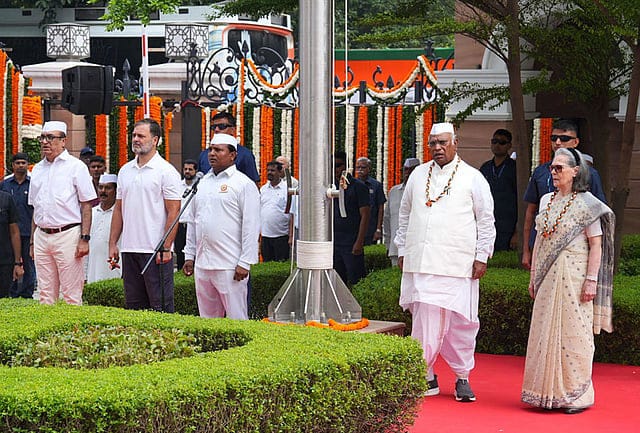
New Delhi, August 15, 2026 The singing of Vande Mataram at the Congress' Independence Day programme in Delhi triggered a political controversy on Saturday, with the BJP alleging that Sonia Gandhi objected to the complete rendition of the National Song. The Congress rejected the allegation, saying Gandhi was only asking for a chair for party president Mallikarjun Kharge, who had been standing for some time. BJP MP Sudhanshu Trivedi criticised the Congress over the episode, saying, "Thanks to Prime Minister Narendra Modi's resolve and in tune with the sentiments of crores of Indians, this is the first Independence Day where Vande Mataram has been sung in its entirety." He alleged that Sonia Gandhi, Rahul Gandhi and Kharge were seen conversing and gesturing while the song was being performed, calling the conduct objectionable and disrespectful. BJP IT cell chief Amit Malviya also claimed Sonia Gandhi appeared agitated when the rendition continued beyond the initial stanzas. "After the initial stanzas of Vande Mataram were sung, Sonia Gandhi became agitated and asked for the rendition to be stopped rather than played in full. Rahul Gandhi too appeared to signal that it should end. They were told to let it continue. The message was clear: the complete National Song is now to be respected under the new legal framework, and intentional obstruction or disturbance can invite serious consequences," he wrote on X. The Congress maintained that the complete version of Vande Mataram was sung at its headquarters and clarified that Sonia Gandhi's gesture was not aimed at stopping the song. According to the party, she was simply asking for a chair for Kharge. The BJP, however, continued its criticism, with Malviya alleging that the episode reflected what he described as the Congress' uneasy relationship with a culturally confident and civilisationally rooted India. The controversy comes amid a wider debate over the history and rendition of Vande Mataram. The first two stanzas of the song, written by Bankim Chandra Chatterjee in 1875, were adopted as the National Song in 1937, while four other stanzas containing references to Hindu goddesses were left out. The decision was linked to concerns that these portions could be viewed as exclusionary, including by sections of the Muslim community. The BJP has accused the Congress of being divisive over the issue. The dispute has gained further significance following recent government and parliamentary measures concerning the complete rendition of the song. In February, the Centre mandated the singing of Vande Mataram in its entirety at public gatherings, schools and official government functions. Parliament also passed a Bill last month, later receiving the President's assent, making intentional obstruction, disruption or prevention of the singing of Vande Mataram a criminal offence. The latest Congress-BJP clash has therefore once again placed the National Song at the heart of a political debate over patriotism, national identity and historical sensitivities.