PM Modi Leads Fifth National Conference of Chief Secretaries in Delhi, Focuses on Human Capital and Cooperative Federalism
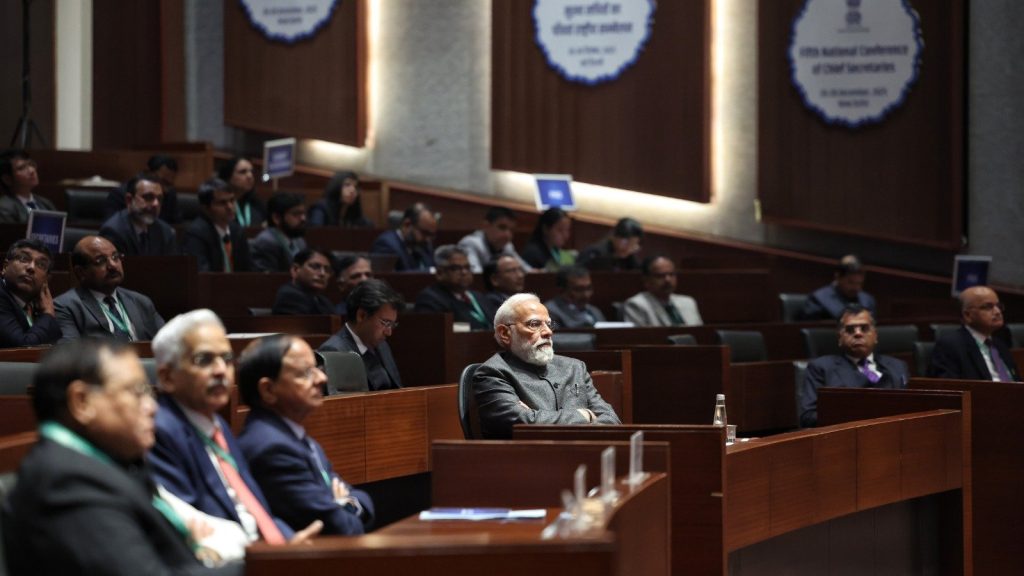
New Delhi | December 29, 2025 Prime Minister Narendra Modi on Sunday chaired the fifth National Conference of Chief Secretaries in New Delhi, highlighting the importance of human capital, quality governance and strong cooperation between the Centre and States in achieving the goal of a developed India, or Viksit Bharat. The three-day conference was held at Pusa, Delhi, from December 26 to December 28. The conference brought together Chief Secretaries and senior officials from all States and Union Territories, along with experts from various sectors and senior officers from the Central government. The aim was to encourage collective decision-making and closer coordination between different levels of government. Addressing the gathering, the Prime Minister said the conference was another significant step in strengthening Centre-State partnership. He stressed that human capital, which includes education, skills, health and overall capability, is the most important driver of economic growth and social development. He said these areas must be developed through a coordinated approach involving all departments and governments. The main theme of the conference was “Human Capital for Viksit Bharat”. PM Modi pointed out that nearly 70 per cent of India’s population is of working age, calling it a major demographic advantage. He said that if this potential is used wisely, it can greatly accelerate India’s development journey in the coming years. The Prime Minister said India has boarded the “Reform Express” and is moving through a phase of next-generation reforms powered by the aspirations of its youth. He added that the country is steadily progressing towards becoming a major global economic power. Emphasising quality and excellence, he said Viksit Bharat cannot be achieved with average outcomes and called for higher standards in governance, service delivery and manufacturing. Highlighting self-reliance, PM Modi said the “Made in India” brand should stand for quality, trust and competitiveness across the world. He reiterated the principle of “Zero Defect, Zero Effect”, urging the Centre and States to work together to ensure high-quality production with minimal environmental impact. He also asked governments to jointly identify 100 products for domestic manufacturing to reduce import dependence. On skill development, the Prime Minister stressed the need to align training with current and future demands, both within India and globally. He said stronger collaboration between educational institutions and industry is essential to create a skilled and future-ready workforce, especially in higher education. The Prime Minister also spoke about employment opportunities, highlighting tourism as a major job creator. He urged States to develop at least one world-class tourist destination along with a strong support system. He also referred to preparations for hosting the 2036 Olympics, stressing the need for long-term planning in sports infrastructure and talent development. PM Modi said the National Manufacturing Mission would be launched soon and asked States to give it top priority. He called for improvements in Ease of Doing Business, especially in land availability, utilities and social infrastructure, to attract global investment. He also highlighted the importance of strengthening the services sector, including healthcare, education, transport, tourism and artificial intelligence. Talking about agriculture, he said India must move towards high-value farming, dairy and fisheries with a focus on exports to become the food basket of the world. He also encouraged States to focus on districts with low productivity and weak learning outcomes. The Prime Minister concluded by urging States and Union Territories to prepare 10-year action plans with clear short-, medium- and long-term goals, supported by technology for effective monitoring and implementation. PM Modi Leads Fifth National Conference of Chief Secretaries in Delhi, Focuses on Human Capital and Cooperative Federalism Prime Minister Narendra Modi on Sunday chaired the fifth National Conference of Chief Secretaries in New Delhi, bringing together top officials from all States and Union Territories for a three-day discussion on India’s development path. Held at Pusa, Delhi, from December 26 to 28, the conference focused on building strong cooperation between the Centre and States to achieve the vision of a Viksit Bharat. Addressing the gathering, PM Modi stressed that human capital is the backbone of economic growth and social progress. He said education, skills, health and capabilities must be developed together through a coordinated approach across governments. Highlighting India’s demographic strength, he noted that nearly 70 per cent of the population is of working age, calling it a major opportunity if used wisely. The Prime Minister said India is moving ahead on the “Reform Express”, driven by the energy and ambitions of its youth. He emphasised that becoming a developed nation means focusing on quality and excellence in governance, public services and manufacturing, rather than settling for average results. On self-reliance, PM Modi said “Made in India” should become a global symbol of quality and trust. He reiterated the idea of “Zero Defect, Zero Effect” and urged States and the Centre to identify 100 products for domestic manufacturing to reduce imports and strengthen the economy. The Prime Minister also highlighted the need to align skill development with present and future job demands, calling for closer ties between industry and educational institutions. He pointed to tourism as a major source of employment and urged States to develop at least one world-class tourist destination. He also spoke about long-term planning for sports, especially in view of India’s preparations for hosting the 2036 Olympics. PM Modi said the National Manufacturing Mission will be launched soon and asked States to focus on improving Ease of Doing Business. He also stressed the importance of services such as healthcare, education, transport, tourism and artificial intelligence. The Prime Minister concluded by urging States to prepare 10-year action plans with clear goals and regular monitoring.