Munnar Turns Violet as Neelakurinji Returns
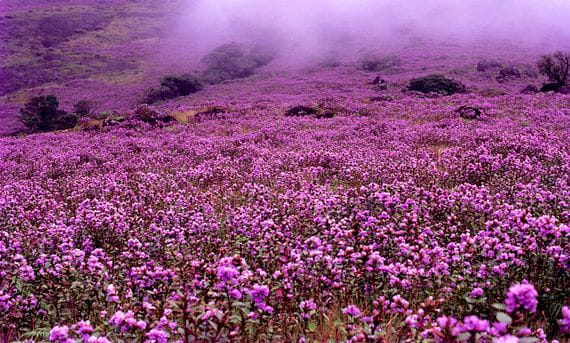
New Delhi, September 07, 2026 The rolling hills of Munnar in Kerala’s Idukki district are once again turning shades of violet and blue as the rare Neelakurinji flowers bloom in large numbers after nearly 12 years. The striking display is currently visible across parts of Chokramudi, Mattupetty and Korandakkad, creating a natural purple carpet across sections of the Western Ghats. The 2026 bloom has also drawn attention because it has been mistaken for an early return of the famous Neelakurinji cycle. Neelakurinji, scientifically known as Strobilanthes kunthiana, has a distinctive flowering pattern. Unlike plants that bloom annually, large populations of the species remain vegetative for several years before flowering together roughly once every 12 years. This unusual behaviour is called plietesial flowering. After flowering and producing seeds, the plants complete their life cycle and die, while a new generation emerges from the seeds. The 2026 flowering, however, is different from the celebrated bloom witnessed at Eravikulam National Park in 2018. That particular population is expected to flower again only in 2030. Different populations of Neelakurinji in the Munnar region follow separate 12-year cycles. Kerala Tourism records show that the Mattupetty-Kannimala population flowered in 1990, 2002 and 2014, making 2026 the expected year for its next bloom. This difference in flowering cycles also explains reports claiming that Neelakurinji has bloomed “four years early”. The plant has not deviated from its established 12-year biological cycle. Instead, the Chokramudi-Mattupetty population follows a different schedule from the Eravikulam population, allowing major Neelakurinji displays to occur in different parts of Munnar in different years. Neelakurinji grows naturally in the high-altitude shola-grassland ecosystems of the Western Ghats, generally above about 1,500 metres. When thousands of plants bloom simultaneously, they can transform entire slopes into spectacular violet and blue landscapes. The 2026 flowering therefore offers a rare visual spectacle while also highlighting the distinctive ecological cycles that shape the mountain landscapes of Munnar.