PM Modi to Visit Jordan to Strengthen Trade, Investment and Regional Connectivity as Bilateral Ties Mark 75 Years
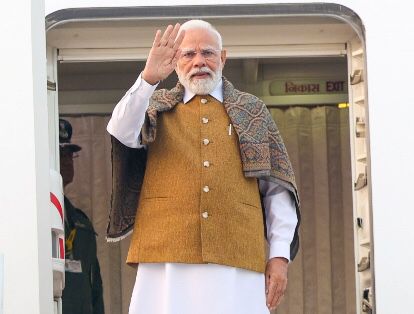
New Delhi | December 14 Prime Minister Narendra Modi will visit the Hashemite Kingdom of Jordan from December 15 to 16 on the invitation of King Abdullah II bin Al Hussein, in a move aimed at deepening economic ties, expanding trade cooperation, and strengthening regional connectivity. This will be Prime Minister Modi’s first full bilateral visit to Jordan and comes at a symbolic moment, as India and Jordan mark 75 years of diplomatic relations. The visit reflects the growing importance both countries place on their partnership and follows sustained high-level political engagement between New Delhi and Amman in recent years. During the two-day visit, the Prime Minister is expected to hold wide-ranging discussions with King Abdullah II and senior Jordanian leaders, focusing on trade, investment, food security, connectivity, and regional cooperation. Economic cooperation will be at the heart of the visit, as India and Jordan continue to build a strong and steadily expanding trade relationship. India has emerged as Jordan’s third-largest trading partner, with bilateral trade valued at around USD 2.8 billion. The two sides are expected to explore ways to diversify trade, improve market access, and encourage greater private sector participation. Jordan plays a crucial role in supporting India’s agricultural needs, particularly through the supply of fertilisers. The country is a major exporter of phosphates and potash to India, both of which are essential for Indian farmers and food production. A key pillar of this partnership is the Jordan India Fertilizer Company, or JIFCO, an USD 860 million joint venture between India’s Indian Farmers Fertiliser Cooperative (IFFCO) and the Jordan Phosphates Mines Company. The project produces phosphoric acid in Jordan for export to India and has become an important contributor to India’s long-term food security. Indian investments in Jordan have also grown steadily over the years. Around 15 Indian-origin companies operate in the country, with cumulative investments close to USD 500 million. These firms are mainly active in the garment and manufacturing sectors and are located in Jordan’s Qualified Industrial Zones. From these zones, Indian companies export finished products to global markets, benefiting from Jordan’s free trade agreements and preferential access to the United States, Europe, and the wider Arab region. Improved connectivity has further strengthened people-to-people and business ties between the two countries. Royal Jordanian has launched direct flights between Amman and Mumbai, making travel easier for business leaders, tourists, and professionals. There are also plans to expand air services to New Delhi. In addition, Jordan offers visa-on-arrival and e-visa facilities to Indian citizens, which has helped boost tourism and short-term business travel. Jordan is also emerging as an important partner in regional infrastructure and connectivity plans. It is viewed as a key link in the proposed India–Middle East–Europe Economic Corridor, or IMEC. Under this initiative, Jordan is expected to act as a strategic land bridge connecting major markets across the Middle East and onward to Europe. Discussions during the visit are likely to touch on Jordan’s role in this corridor and how it can support faster, more reliable trade routes. Beyond economics, the visit also carries political and diplomatic significance. Both India and Jordan share a common interest in regional stability, dialogue, and cooperation. Jordan’s position in West Asia and its balanced approach to regional issues make it an important partner for India in the broader Middle East. Prime Minister Modi’s visit is expected to reaffirm India’s long-term commitment to Jordan and signal a new phase in bilateral relations. As the two countries look ahead, the focus will be on turning strong political goodwill into tangible outcomes in trade, investment, connectivity, and regional cooperation, benefiting businesses and people on both sides. PM Modi to Visit Jordan to Strengthen Trade, Investment and Regional Connectivity as Bilateral Ties Mark 75 Years Prime Minister Narendra Modi is set to visit the Hashemite Kingdom of Jordan from December 15 to 16, following an invitation from King Abdullah II bin Al Hussein. This will be his first full bilateral visit to the country and comes at a meaningful time, as India and Jordan complete 75 years of diplomatic relations. The visit highlights the steady growth in ties between the two nations, especially in the areas of trade, investment, and regional cooperation. India has emerged as Jordan’s third-largest trading partner, with bilateral trade reaching nearly USD 2.8 billion. Economic cooperation is expected to be a major focus during discussions between the leaders. Jordan plays an important role in supporting India’s agricultural sector by supplying key fertilisers such as phosphates and potash. One of the strongest examples of this partnership is the Jordan India Fertilizer Company (JIFCO), an USD 860 million joint venture between India’s IFFCO and the Jordan Phosphates Mines Company, which produces phosphoric acid for export to India and supports India’s food security. Indian companies have also made a strong presence in Jordan. Around 15 Indian-origin firms, with investments close to USD 500 million, operate mainly in garment and manufacturing sectors. These companies export to global markets by using Jordan’s trade agreements and access to the US, Europe, and Arab regions. Connectivity between the two countries has improved with direct Royal Jordanian flights between Amman and Mumbai, with plans to expand services to New Delhi. Visa-on-arrival and e-visa facilities for Indians have further boosted travel and business exchanges. Jordan is also seen as a key partner in the proposed India–Middle East–Europe Economic Corridor, where it could serve as a strategic land bridge connecting major regions. Overall, the visit reflects India’s growing engagement with Jordan and its focus on long-term cooperation across sectors.