
ISRO Sets New Heavy-Lift Record as LVM3 Rocket Launches 6,100 kg BlueBird-2 Satellite into Orbit
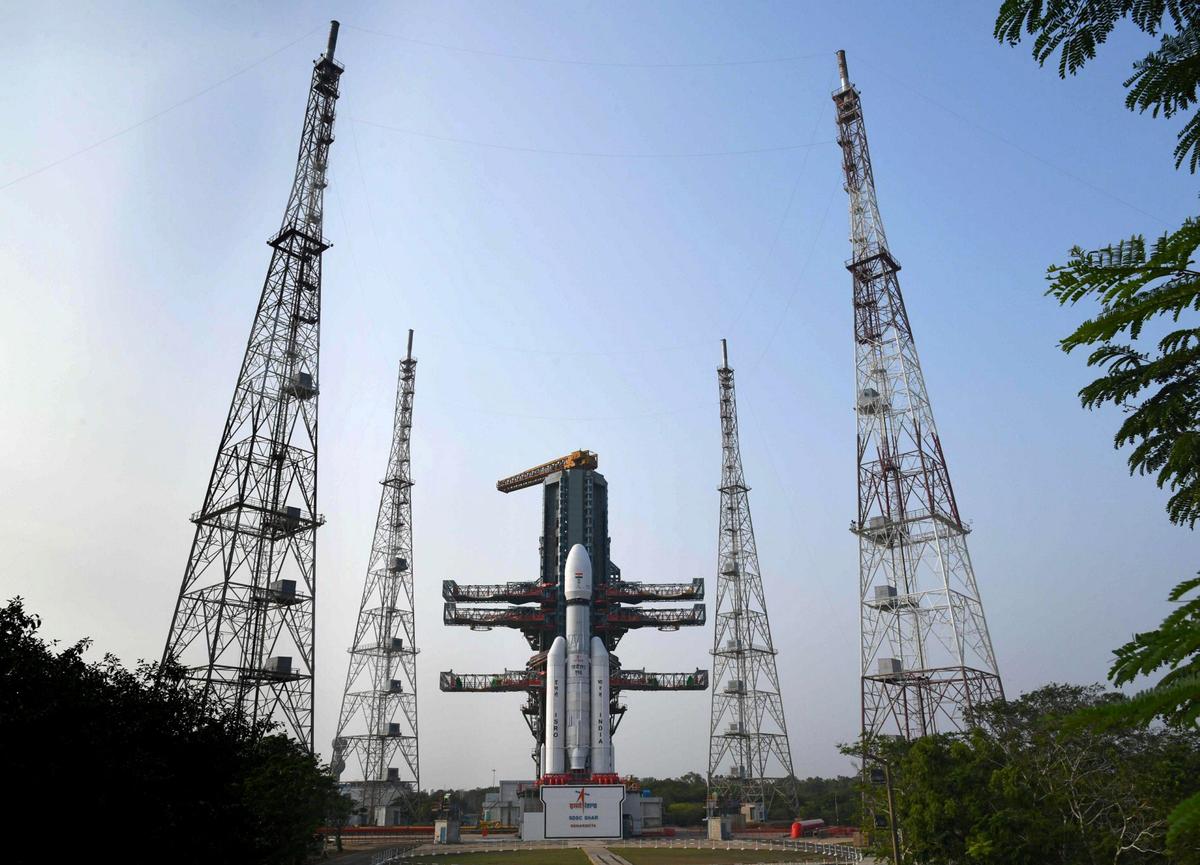
Sriharikota, India | December 24, 2025 The Indian Space Research Organisation (ISRO) achieved a major milestone on Wednesday morning by successfully launching the BlueBird Block-2 communication satellite, marking the heaviest payload ever carried by its LVM3 rocket into Low Earth Orbit. The mission highlights India’s growing role in the global commercial space market and reinforces ISRO’s reputation for reliable heavy-lift launches. The launch took place at 8:55 am from the Satish Dhawan Space Centre in Sriharikota, Andhra Pradesh. ISRO’s LVM3-M6 launch vehicle, often referred to as the agency’s “Baahubali” rocket due to its powerful lift capability, carried the 6,100-kilogram satellite onboard. Within about 15 minutes of liftoff, the spacecraft was scheduled to separate from the rocket and begin its journey in orbit. This mission is significant because it sets a new benchmark for ISRO. Until now, the heaviest payload launched by the LVM3 weighed around 4,400 kilograms. That record was set during the LVM3-M5 mission in November, when a communication satellite was placed into Geosynchronous Transfer Orbit. The BlueBird Block-2 launch comfortably surpasses that mark, proving the LVM3’s ability to handle larger and more demanding missions. The satellite belongs to US-based AST SpaceMobile, a company working to build the world’s first space-based cellular broadband network that connects directly to ordinary smartphones. The goal of this technology is to provide mobile connectivity even in remote or underserved regions, without the need for special satellite phones. Once fully operational, the network is expected to support 4G and 5G services, including voice calls, video calls, messaging, streaming, and mobile data across the globe. The launch was carried out under a commercial agreement between NewSpace India Limited (NSIL), ISRO’s commercial arm, and AST SpaceMobile. This partnership reflects ISRO’s increasing focus on commercial launches for international clients, alongside its scientific and national missions. For NSIL, the successful deployment of such a heavy satellite strengthens India’s position as a competitive and trusted launch service provider. The LVM3 launch vehicle itself is a key part of ISRO’s heavy-lift capabilities. Standing 43.5 metres tall, the three-stage rocket is also known as the Geosynchronous Satellite Launch Vehicle Mark III. It is powered by a cryogenic upper stage developed by ISRO’s Liquid Propulsion Systems Centre, which allows the rocket to carry heavier payloads into higher orbits. Two large S200 solid rocket boosters, developed by the Vikram Sarabhai Space Centre in Thiruvananthapuram, provide the massive thrust required at liftoff. Over the years, the LVM3 has proven its reliability through several high-profile missions. It has launched Chandrayaan-2 and Chandrayaan-3, India’s lunar exploration missions, as well as multiple OneWeb satellite launches that placed dozens of satellites into orbit. The BlueBird Block-2 mission adds another important success to this list. For ISRO, this launch answers several key questions that matter in the space industry: who carried out the mission (ISRO and NSIL), what was launched (the 6,100-kg BlueBird Block-2 satellite), when it happened (December 24, 2025, at 8:55 am), where it was launched from (Sriharikota, Andhra Pradesh), why it matters (it is the heaviest LEO payload launched by LVM3 and supports global mobile connectivity), and how it was achieved (using the powerful three-stage LVM3-M6 rocket). As India continues to expand its space ambitions, missions like this underline ISRO’s technical strength and commercial potential. Simply put, this wasn’t just a launch—it was a heavyweight statement. ISRO Sets New Heavy-Lift Record as LVM3 Rocket Launches 6,100 kg BlueBird-2 Satellite into Orbit ISRO created history once again on December 24, 2025, by successfully launching the BlueBird Block-2 satellite, the heaviest payload ever carried by India’s LVM3 rocket. The powerful LVM3-M6 launch vehicle lifted off at 8:55 am from the Satish Dhawan Space Centre in Sriharikota, Andhra Pradesh, marking a proud moment for India’s space journey. Weighing 6,100 kg, the BlueBird Block-2 satellite belongs to US-based AST SpaceMobile and was placed into Low Earth Orbit. Within about 15 minutes of launch, the satellite separated smoothly from the rocket, showing the reliability of ISRO’s heavy-lift system, often called the “Baahubali” rocket because of its strength. This mission is important not just for its weight record, but also for its purpose. The BlueBird Block-2 satellite is part of a future space-based cellular broadband network. The goal is simple but powerful — to provide mobile connectivity directly to regular smartphones, even in remote and hard-to-reach areas. The network will support 4G and 5G services, including calls, messages, video streaming and data, for both commercial and government use worldwide. The launch was carried out under a commercial agreement between NewSpace India Limited (NSIL), ISRO’s commercial arm, and AST SpaceMobile. This reflects ISRO’s growing role in the global space market and its ability to handle large international missions. The 43.5-metre-tall LVM3 rocket, with its two solid boosters and cryogenic engine, has earlier launched missions like Chandrayaan-2, Chandrayaan-3 and OneWeb satellites. With this record-breaking launch, ISRO has once again shown that India is ready to take on bigger challenges in space. A heavy payload, a global mission, and a proud moment for India.